

Shopping cart

close
Tel : 94870 36000, 94860 36000, 94890 36000

What are Solar Panels and How Do They Work?

In recent years, solar energy has gained significant attention. Solar panels have emerged as a popular solution for harnessing this sustainable energy source. Dr. Emily Carter, a leading expert in renewable energy, notes, “Solar panels not only reduce electricity bills but also minimize our carbon footprint.” This highlights the dual advantage of solar technology.

Solar panels convert sunlight into electricity through the photovoltaic effect. This process involves converting light energy into electrical energy, making solar panels a reliable green technology. Many homeowners have found that installing these panels leads to substantial savings and energy independence. However, the initial installation cost can be a barrier.

Understanding solar panels and their functions informs better investment decisions. While solar technology is advancing rapidly, some aspects still require improvement. Efficiency and storage capacity are ongoing challenges. A thorough consideration of these factors leads to more informed choices about energy solutions.
What are Solar Panels and How Do They Work?

What Are Solar Panels: An Overview of Photovoltaic Technology

Solar panels harness sunlight and convert it into electricity through photovoltaic technology. This process relies on semiconductor materials such as silicon to create an electric field. When sunlight hits the solar cells, it excites electrons, generating direct current (DC) electricity. In 2022, the International Energy Agency reported that solar energy accounted for around 10% of global electricity generation. This rapid growth highlights its increasing importance in the energy landscape.

Efficiency remains a crucial factor in solar panel performance. Most commercial panels have an efficiency rate between 15% to 22%. Research continues to explore alternatives, such as perovskite solar cells, which could exceed 30% efficiency. However, challenges arise in the scalability of new technologies and material stability. Many current solar panels require significant land use. Integrating them into urban environments can be complex.

Environmental impacts also need consideration. The production process of solar panels involves mining and the use of chemicals. These factors can affect local ecosystems. As the solar industry evolves, addressing these issues becomes essential. Balancing energy needs with environmental preservation is vital for sustainable growth in solar technology.

The Science Behind Solar Energy: How Photovoltaic Cells Function

Photovoltaic (PV) cells lie at the heart of solar panels. They convert sunlight into electricity using the photovoltaic effect. When sunlight hits the cell, it excites electrons within the semiconductor material, generating a flow of electricity. Most commonly, these cells use silicon due to its abundant availability and effective electronic properties. A report by NREL notes that efficiencies can reach over 20% in commercial products.

The process begins when photons from sunlight strike the surface of a PV cell. This interaction helps create electron-hole pairs. When these electrons move through the semiconductor, they generate direct current (DC) electricity. Inverters convert this DC to alternating current (AC), suitable for home use. According to the International Energy Agency, global solar photovoltaic capacity reached approximately 800 GW in 2020, showcasing rapid growth in the industry.

However, solar energy faces challenges. Production of PV cells involves energy and resource use. Silicon mining can have environmental impacts. Additionally, solar energy is intermittent, reliant on weather and daylight. Storage solutions are essential for maximizing efficiency and reliability. Exploring improvements in technology and material science could enhance PV cell performance while addressing these concerns.

What are Solar Panels and How Do They Work? - The Science Behind Solar Energy: How Photovoltaic Cells Function

Dimension Details
Type of Solar Panels Monocrystalline, Polycrystalline, Thin-film
Efficiency 15% - 22% for residential panels
Lifespan 25-30 years (typically guaranteed)
Components Photovoltaic cells, Inverters, Mounting structure
Benefits Renewable energy source, Reduces electricity bills, Low maintenance costs
Working Principle Conversion of sunlight into electricity via the photovoltaic effect
Environmental Impact Minimal emissions during operation, recyclable materials

Types of Solar Panels: Comparing Monocrystalline, Polycrystalline, and Thin-Film

When considering solar panels, the type plays a critical role in performance. Monocrystalline panels are popular for their efficiency. They are made from a single crystal structure. This design allows for higher energy conversion rates. Typically, they perform well in limited space. However, they are often more expensive to produce.

Polycrystalline panels offer a more budget-friendly option. Made from multiple silicon crystals, they generally yield lower efficiency. They are recognizable by their bluish hue. While they require more space, their production process is simpler and cheaper. Some users find them less aesthetically pleasing, which can be an issue for homeowners.

Thin-film panels are another alternative. These panels are lightweight and flexible. They can be applied to various surfaces, offering versatility. However, they usually have lower efficiency compared to crystal panels. Their lower output means more space is needed for the same power. This can lead to challenges in urban settings where roof space is limited. Evaluating your specific needs is essential to making the right choice.

Efficiency Ratings: Understanding Solar Panel Performance Metrics

Solar panel efficiency directly impacts energy production. It measures how well a panel converts sunlight into electricity. The efficiency ratings of solar panels typically range from 15% to 22%. High-efficiency panels can generate more electricity per square meter, which is crucial for space-limited installations.

Industry reports show that the most common efficiency rating for residential systems is around 17%. However, advancements have been made. The U.S. Department of Energy has noted that new technologies may push efficiency beyond 25% in laboratory settings. Yet, these breakthroughs often face production and cost challenges. Not every household can benefit from the very latest tech.

Consider the trade-offs. Higher efficiency panels usually come with a higher price tag. In some instances, homeowners may prioritize lower costs over higher outputs. It's essential to balance budget and performance, keeping in mind long-term savings. Understanding how these metrics affect your solar energy goals can lead to better choices.

The Economic Impact of Solar Panels: Costs, Savings, and Incentives

What are Solar Panels and How Do They Work?

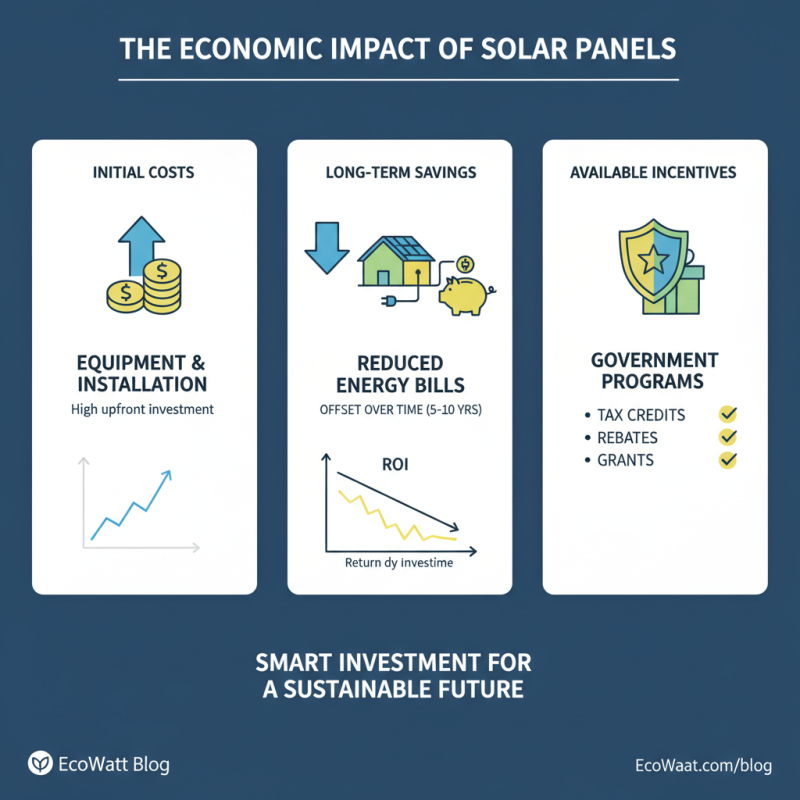
The economic impact of solar panels is significant. Initially, the costs can seem high. However, the long-term savings are often remarkable. Many households see their energy bills decrease sharply. This reduction can offset installation costs over time. Additionally, various incentives are available. Governments often provide tax credits and rebates. These programs can alleviate the financial burden of going solar.

Consider local energy rates when evaluating costs. Some areas have higher rates, making solar more attractive. Research available incentives in your area. They vary widely and can enhance savings. Engaging with a solar consultant can also provide personalized insights. This could help you maximize benefits based on your specific situation.

It’s important to reflect on your energy consumption habits. Reducing energy usage will complement solar energy. Be mindful of the systems' maintenance requirements too. While solar technology is reliable, it does need care to maintain efficiency. Understanding these aspects ensures you make informed decisions.

Contact Us
close slider
Scroll To Top