China Best Solar Panel Off Grid System for Homes?
Choosing the China Best Solar Panel Off Grid System for Homes requires more than comparing panel prices. A suitable Solar Panel Off Grid System should match your daily electricity use, roof space, climate, and backup expectations. It must also handle cloudy days without leaving essential appliances powerless. The best choice is practical, not simply the largest or cheapest package. Start with real household data.
Experienced installers usually review electricity bills, appliance wattage, sunlight hours, and battery requirements. For example, a home using 5 kilowatt-hours daily may need several high-efficiency panels and a properly sized lithium battery. A refrigerator, water pump, and internet router also require different starting currents. Small details matter. A weak inverter can cause repeated shutdowns.
China offers many capable solar manufacturers, but quality varies between suppliers. Look for verified testing, transparent warranties, documented battery cycle life, and responsive technical support. Reputable products should follow relevant international safety and performance standards. Ask whether replacement parts remain available after installation. That question is often overlooked.
A reliable system should include protection against overcurrent, overheating, and deep battery discharge. Local electrical professionals should confirm wiring, grounding, and installation requirements. Online specifications cannot replace an inspection of your roof and household loads. Some advertised capacities may appear impressive, yet usable energy can be lower after conversion losses and reserve settings. This is where careful planning matters. There is no universal winner. The right system balances cost, resilience, maintenance, and honest performance expectations. A little uncertainty is normal, but it should be measured before purchase.
What Is a China-Made Off-Grid Solar System for Homes?
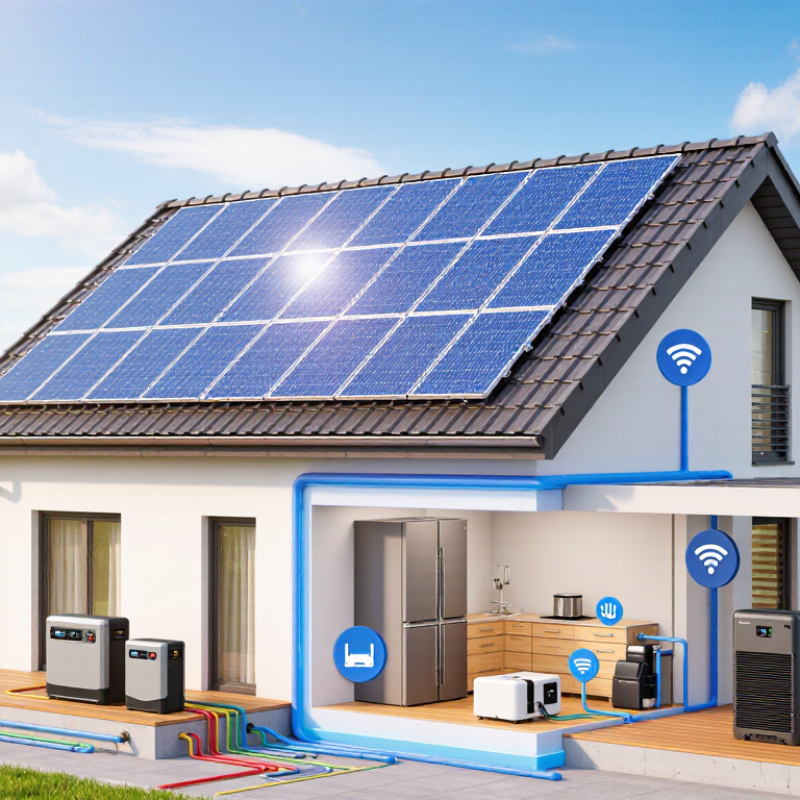
A China-made off-grid solar system for homes generates and stores electricity without relying on a public grid. It normally combines solar panels, a charge controller, batteries, an inverter, protection devices, and monitoring equipment. Panels produce daytime power, while batteries support lighting, refrigeration, water pumps, and evening use. The inverter changes stored direct current into household alternating current. Simple, but not effortless.
China remains central to global solar manufacturing. The International Energy Agency’s Renewables 2024 report states that China represents over 80% of global solar module manufacturing capacity. This scale can reduce equipment costs, but price alone proves little. IRENA reported that solar photovoltaic electricity costs fell by 12% in 2023. Off-grid buyers still face battery replacement, transport, installation, and maintenance expenses.
A reliable system begins with a load audit, not a panel catalogue.
Record the refrigerator’s startup surge, pump hours, and winter sunlight. A 3-kilowatt inverter may fail when a 1.5-kilowatt pump starts abruptly. That detail is often missed. Battery capacity should cover essential loads through several cloudy days, with usable capacity reduced by temperature and discharge limits. Look for documented testing under relevant IEC safety standards, clear battery cycle data, verified protection functions, and a written warranty. My first sizing estimate would likely be too optimistic without seasonal measurements. Real homes are messier than spreadsheets.
Key Components of a Complete Home Solar Power System
China Best Solar Panel Off Grid System for Homes?
A complete home solar power system needs more than panels. It needs a charge controller, battery bank, inverter, protection devices, wiring, and monitoring equipment. The International Renewable Energy Agency reported 1,419 GW of global solar capacity by the end of 2023. That growth shows maturity, but every home still needs careful sizing.
Panel output depends on roof direction, seasonal sunlight, dust, and temperature. A 5 kW array may produce very different energy in winter and summer. The battery should cover night use and several cloudy hours, not just daily demand. Lithium-based batteries usually offer higher usable capacity, while lead-acid systems can cost less initially. The choice is not always obvious.
The inverter must handle starting loads from pumps, refrigerators, or power tools. Oversizing it slightly can prevent nuisance shutdowns. DC fuses, surge protection, grounding, and a manual isolation switch are essential.
The IEA’s Batteries and Secure Energy Transitions report expects global energy storage deployment to grow sharply by 2030, driven by renewable power. Still, batteries remain the most expensive component in many off-grid homes.
Real installation experience teaches a harder lesson: energy habits matter. A family using electric heating may need twice the storage assumed from monthly bills. Dust on panels can also reduce output more than expected. NREL research commonly uses about 0.5% annual PV degradation, but poor ventilation and weak maintenance can accelerate losses. Conservative calculations are safer, although they can make the system look unnecessarily large.
How to Size an Off-Grid Solar System for Household Needs
China Best Solar Panel Off Grid System for Homes?
How to Size an Off-Grid Solar System for Household Needs
Sizing an off-grid solar system starts with an honest load list. Record each appliance, its wattage, and daily operating hours. A 100-watt refrigerator running for eight hours uses about 800 watt-hours. Add lights, fans, cooking equipment, water pumps, and device charging. Include standby consumption. Small losses become significant over several days.
Multiply your daily total by a safety factor of 1.2 to 1.4. This allows for wiring losses, cloudy weather, and battery inefficiency. If a home needs 5,000 watt-hours daily and receives five peak sun hours, a 1.5-kilowatt array may be too small after derating. A practical design could require about 1.8 to 2.2 kilowatts. Battery capacity depends on autonomy. For two cloudy days, 10,000 watt-hours of storage may be needed, adjusted for the battery’s usable discharge limit. The inverter must handle continuous demand and motor starting surges. Pumps can surprise you.
Tips: Measure real appliance use with a plug-in meter when possible. Check winter sunlight, not only annual averages. Keep essential and nonessential loads separate. I once underestimated evening lighting because each lamp seemed insignificant. The combined demand changed the battery size. Recheck your assumptions before purchasing equipment.
China Best Solar Panel Off Grid System for Homes? - How to Size an Off-Grid Solar System for Household Needs
| Household Profile |
Estimated Electrical Demand |
Recommended Off-Grid System Size |
Typical Applications |
| Residents |
Daily Energy Use |
Peak Load |
Autonomy Target |
Solar Array |
Battery Capacity |
Inverter Rating |
Charge Controller |
Approx. Solar Modules |
| Essential Cabin |
1–2 |
3 kWh/day |
1.5 kW |
1 day |
1.0 kW |
4 kWh nominal |
2 kW |
40–50 A |
3 × 350 W |
LED lighting, small refrigerator, router, phone charging, laptop, and occasional water pump. |
| Small Efficient Home |
2–3 |
6 kWh/day |
3 kW |
1 day |
2.0 kW |
8 kWh nominal |
4 kW |
80–100 A |
6 × 350 W |
Refrigerator, efficient lighting, television, computers, small kitchen appliances, and a compact washing machine. |
| Medium Family Home |
3–4 |
10 kWh/day |
5 kW |
1–1.5 days |
3.5 kW |
14 kWh nominal |
6 kW |
120–150 A |
10 × 350 W |
All basic household loads, refrigerator/freezer, washing machine, microwave, pressure pump, and moderate entertainment use. |
| Large Efficient Home |
4–6 |
15 kWh/day |
7 kW |
1.5 days |
5.0 kW |
22 kWh nominal |
8 kW |
180–220 A |
14 × 350 W |
Multiple refrigerators, well pump, office equipment, kitchen appliances, efficient air conditioning, and larger laundry loads. |
| High-Demand Rural Home |
5–8 |
25 kWh/day |
10 kW |
2 days |
8.5 kW |
50 kWh nominal |
12 kW |
300–350 A |
24 × 350 W |
Several appliances, water pumping, refrigeration, workshop tools, efficient cooling, and occasional high-starting-current equipment. |
Sizing assumptions:
Values are planning estimates for an efficient household using approximately 4 peak-sun-hours per day, a 75% overall solar-system performance factor, and lithium battery storage designed around 80% usable depth of discharge. Actual sizing should be adjusted for local solar radiation, winter conditions, roof orientation, shading, appliance startup currents, wiring losses, and required backup days.
Steps for Installing and Connecting the Solar System
Installing a home off-grid solar system begins with a site check, not a purchase. Measure roof direction, shading, wind exposure, and cable distances. In China, building and electrical requirements may differ by province. Confirm permits with a qualified installer. Mark safe positions for panels, batteries, the inverter, and disconnect switches. Keep batteries dry, ventilated, and away from heat sources. Small details matter.
Mount the panels on a strong, weather-resistant structure. Route outdoor cables through protective conduit. Use correctly rated connectors, fuses, and isolators. Check polarity before connecting each circuit. Never guess polarity. Connect the panels to a combiner or charge controller according to its manual. Then connect the battery through a suitable fuse or breaker. Secure every cable lug firmly, without crushing it. Connect the inverter only after checking its voltage range and battery settings.
Before energizing the system, inspect every terminal and cable. Use a multimeter to verify polarity and open-circuit voltage. Follow the manufacturer’s recommended connection sequence, because some systems require the battery before the solar input. Have a qualified electrician connect any household AC circuits, grounding, and backup changeover equipment. Test lights and appliances under load. Record voltage, current, and battery behavior during the first days. A neat installation is not automatically a correct one. I would recheck unusual readings instead of assuming they are harmless. Planning can still miss real-world heat, dust, or seasonal shading. Regular inspections remain necessary.
China Best Solar Panel Off-Grid System for Homes? Steps for Installing and Connecting the Solar System
This example estimates daily electricity use for a small off-grid home. The appliances consume approximately
2.74 kWh per day. With about four peak-sun hours and typical system losses, a practical design would use
approximately 1.0 kW of solar panels, a battery bank of about 3.4 kWh nominal capacity,
a properly sized charge controller, and an inverter matched to the home's peak load. Installation should follow this order:
calculate loads, mount and connect the panels, install protective devices, connect the charge controller to the battery,
connect the inverter, and test voltage, polarity, grounding, and system performance before use.
How to Evaluate Quality, Cost, Safety, and Long-Term Performance
China Best Solar Panel Off Grid System for Homes?
Quality starts with evidence, not a low quotation. IEA PVPS Trends 2024 reported more than 400 GW of new solar capacity worldwide in 2023. That scale improves manufacturing experience, but it does not guarantee every module. Check IEC 61215 and IEC 61730 certification, factory test records, and the product’s temperature coefficient. I also inspect connectors, frame drainage, and cable insulation. Small defects become expensive after repeated heat and rain.
Cost needs a complete calculation. IRENA’s Renewable Power Generation Costs in 2023 reported a global utility-scale solar LCOE of about 0.044 USD per kWh. That benchmark is useful, but home off-grid systems cost more. Batteries, inverters, shipping, installation, and replacement cycles change the result. NREL performance research shows that degradation depends on climate, technology, and maintenance. A spreadsheet cannot predict every dusty afternoon. I would avoid promises of “zero maintenance.”
Tips: Compare usable battery capacity, not only rated capacity. Request round-trip efficiency, cycle-life conditions, warranty exclusions, and protection ratings. Choose an inverter with overload protection, thermal management, and clear fault alarms. Keep batteries shaded and ventilated. Confirm local electrical requirements before installation. A professional inspection may cost more initially, yet poor wiring can waste energy and create serious safety risks. Ask for independent test reports, not just marketing certificates.