Why Choose Anode Carbon Block for Aluminum Smelting?
Why Choose Anode Carbon Block for Aluminum Smelting?
In aluminum smelting, an Anode Carbon Block is more than a consumable component. It carries electric current into the molten electrolyte and supports the electrochemical reaction inside the reduction cell. Its performance affects current efficiency, carbon consumption, voltage stability, and operational emissions.
Dr. Alton T. Tabereaux, a respected aluminum reduction technology expert, has stated, “The quality of the carbon anode is a major factor in the performance of an aluminum reduction cell.” This practical observation explains why smelters examine baked density, electrical resistivity, thermal shock resistance, and CO2 reactivity before accepting a shipment. A dense block can reduce electrolyte penetration. Consistent resistivity can help maintain steadier current flow. Lower reactivity may also reduce uneven wear during service.
Small differences matter.
However, choosing an Anode Carbon Block should not depend on one laboratory value. Plant conditions vary, including bath chemistry, alumina feeding, current intensity, and anode changing practices. A block that performs well in one potline may require adjustment elsewhere. That assumption deserves testing. Buyers should compare supplier certificates with cell data, visual inspection, butt quality, and actual consumption records. Cracks, edge damage, and poor baking uniformity can appear before operation begins.
The strongest choice combines verified specifications with field experience. Reliable suppliers explain their raw materials, forming process, baking controls, and quality inspections. They also support traceability after delivery. Anode Carbon Block selection is therefore a technical decision, not merely a purchasing decision. Performance must be measured. Improvements must be proven.
What Is an Anode Carbon Block? Its Role in 13–15 kWh/kg Aluminum
Why Choose Anode Carbon Block for Aluminum Smelting?
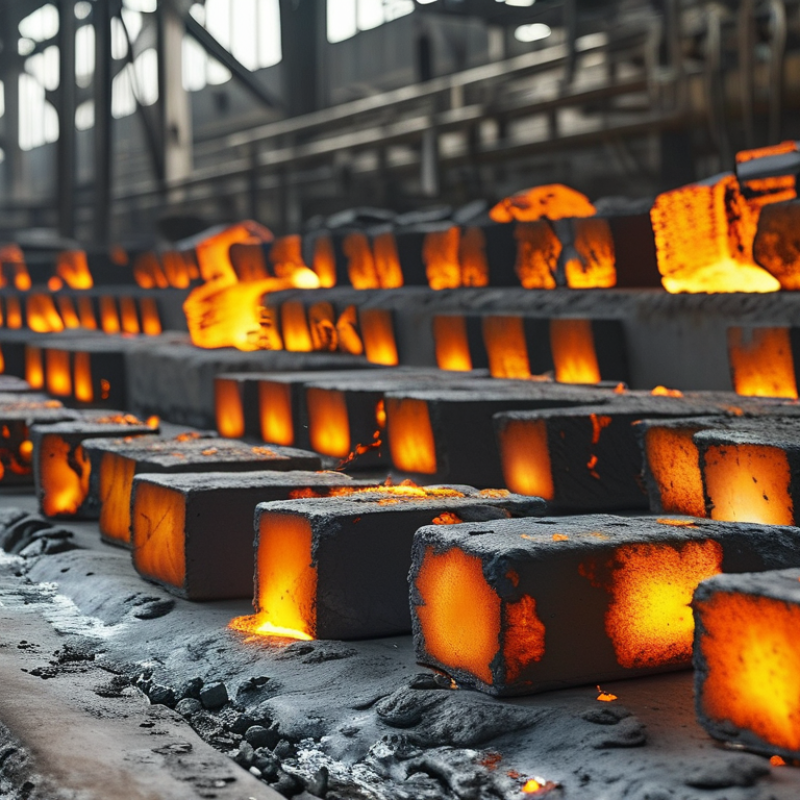
An anode carbon block is a large, baked carbon electrode used in Hall-Héroult cells. It carries direct current through molten cryolite and reacts with alumina during reduction. The carbon anode is consumed, not merely a passive conductor. At the cell surface, oxygen from alumina combines with carbon, mainly forming carbon dioxide and some carbon monoxide.
This reaction supports aluminum production within a typical energy range of 13–15 kWh per kilogram. Industry reports from the International Aluminium Institute place modern smelting near this range, although results vary with cell design, operating practice, and electricity quality. Anode performance matters because electrical resistance creates heat and wastes power. Low-resistivity blocks can improve current efficiency. High density and controlled porosity help reduce air and carbon-dioxide reactivity.
Small details matter.
The IAI’s greenhouse-gas pathway studies identify anode effects as an important source of perfluorocarbon emissions. Poor alumina feeding can trigger these effects, while unstable anodes may worsen cell control. Typical net anode consumption is often reported near 0.40–0.45 tonnes per tonne of aluminum, depending on technology and operating conditions. Carbon purity, baking uniformity, cracking, and thermal shock resistance therefore deserve close inspection. A perfect block does not exist. Even strong laboratory results can weaken under real pot conditions. Experienced operators should compare supplier data with plant measurements, including voltage drop, anode dust, consumption, and anode-effect frequency.
Why Choose Anode Carbon Blocks for Aluminum Smelting?
Their Role in 13–15 kWh/kg Aluminum Electricity Consumption
The chart shows the theoretical electrical energy required at a constant cell voltage of 4.5 V and different current-efficiency levels. The calculation uses Faraday’s law for the three-electron reduction of aluminum ions. Industrial Hall–Héroult cells commonly operate within approximately 13–15 kWh per kilogram of aluminum.
Anode carbon blocks conduct electricity into the electrolyte and participate in the electrochemical reaction. Uniform density, low electrical resistivity, strong mechanical integrity, and stable contact help maintain current efficiency and reduce voltage losses, while poor anode performance can increase energy use and carbon consumption.
Why Anode Quality Matters: 0.4–0.45 t Carbon per t Aluminum
Why Choose Anode Carbon Block for Aluminum Smelting?
Anode quality directly affects carbon use in aluminum smelting. Industry benchmarks commonly indicate 0.4–0.45 tonnes of carbon per tonne of aluminum. This figure appears in sector assessments from the International Aluminium Institute and European Aluminium. It is not a perfect constant. Cell design, current efficiency, bath chemistry, and operating discipline can shift the result.
A dense anode carbon block burns more evenly inside the electrolytic cell. Its low electrical resistivity helps reduce voltage losses. Its resistance to air and carbon dioxide can also limit excess consumption. Poorer blocks may develop cracks, dust, or uneven reaction zones. Small defects become expensive across thousands of anodes.
The carbon footprint is substantial. IAI’s pathway studies identify anode consumption and process emissions as important sources in primary aluminum production. Better anodes cannot solve every smelting problem. They can, however, stabilize operation and reduce avoidable carbon loss. The 0.4–0.45 t/t benchmark deserves scrutiny, not blind acceptance. Each smelter should compare anode density, butt percentage, voltage, current efficiency, and net carbon consumption using measured plant data. That practical record is often more useful than a catalogue specification.
How Low Impurities Improve Metal Purity and Reduce Anode Defects
Why Choose Anode Carbon Block for Aluminum Smelting?
Anode carbon blocks play a direct role in aluminum smelting efficiency. During operation, they carry electrical current through the electrolytic cell. Their chemical purity therefore matters. Trace sulfur, vanadium, nickel, iron, and other elements can affect anode behavior. These impurities may increase gas release, uneven consumption, and carbon dust. Small changes matter.
In a controlled potroom, operators inspect anode surfaces and monitor bath conditions regularly. They also review supplier test data and production records. Low-impurity carbon usually burns more evenly under stable operating conditions. That stability can reduce cracks, edge breakage, and abnormal wear. Fewer anode defects mean less falling carbon in the bath. Metal contamination may also decline. The result is better metal purity and more predictable cell performance.
Not every defect starts in the block. Poor paste mixing, uneven forming pressure, and improper baking can create similar problems. Storage moisture can also damage otherwise suitable carbon. I would not judge anode quality from one laboratory number alone. Independent sampling, trace-element analysis, density checks, and visual inspection provide stronger evidence. A practical review compares these results with anode consumption and metal chemistry. If results drift, the process needs investigation rather than quick assumptions. This approach links material selection with daily operating experience. It also leaves room for correction, because low impurities cannot repair poor handling or unstable cell control.
How Anode Effects Increase Emissions: CF₄ Has a 7,380× CO₂ Impact
Why Choose Anode Carbon Block for Aluminum Smelting?
Anode carbon blocks influence current efficiency, bath stability, and anode effect frequency. During an anode effect, alumina becomes locally depleted. Cell voltage then rises sharply. Fluorocarbon gases, including CF₄, may form at the carbon surface. CF₄ has a 7,380-times greater global warming impact than CO₂ over 100 years. That number makes short events worth serious attention. A dense, uniform carbon block can support steadier current flow and reduce unwanted reactions. However, carbon quality alone cannot prevent every anode effect. Bath chemistry, alumina feeding, and operator response remain critical.
Experienced smelter teams monitor voltage, feeding patterns, anode condition, and event duration together. A quick response can limit CF₄ generation. Better measurement also improves reporting reliability. Some plants focus only on average emissions. That can hide repeated short events. This is an imperfect approach. Real conditions vary between cells, shifts, and raw material batches. Independent sampling and verified calculations can reveal those differences. They also help connect anode design with actual environmental performance, rather than assumed performance.
Tips: Keep alumina feeding stable. Inspect carbon blocks for cracks and uneven wear. Record each anode effect with its duration and voltage profile. Review the data monthly. Small patterns often reveal larger process problems. Reducing event frequency matters. So does reducing event duration.