

Global buyers are no longer choosing DC Chargers by power rating alone. Reliability, compatibility, service access, and total operating cost now matter just as much. The International Energy Agency’s Global EV Outlook 2024 reported nearly four million public charging points worldwide at the end of 2023. Public charging capacity also grew by more than 40% during that year. This expansion creates opportunity, but it also creates confusion. A 60-kilowatt unit may suit an urban fleet, while a 350-kilowatt charger may be excessive without grid capacity.
Standards matter greatly. CharIN Executive Board member Claas Bracklo has stated, “The Megawatt Charging System is a key enabler for the electrification of heavy-duty vehicles.” His point extends beyond trucks. Buyers should examine CCS compatibility, connector design, software support, payment systems, and remote diagnostics before comparing brands. BloombergNEF’s Electric Vehicle Outlook 2024 also emphasizes that charging deployment must expand alongside electric vehicle adoption. Otherwise, impressive hardware may remain underused.
Real sites reveal the difference. A dependable charger should start during winter mornings, recover after communication faults, and provide clear status information beside a busy highway. Certification, warranty response, and local technicians deserve equal attention. Price alone misleads.
There is no permanent global winner. Markets differ.
The top DC Chargers for global buyers are therefore the models that balance speed, uptime, interoperability, safety, and long-term support. However, rankings should remain open to revision. New charging standards, electricity constraints, and fleet demands can quickly change what “best” means.
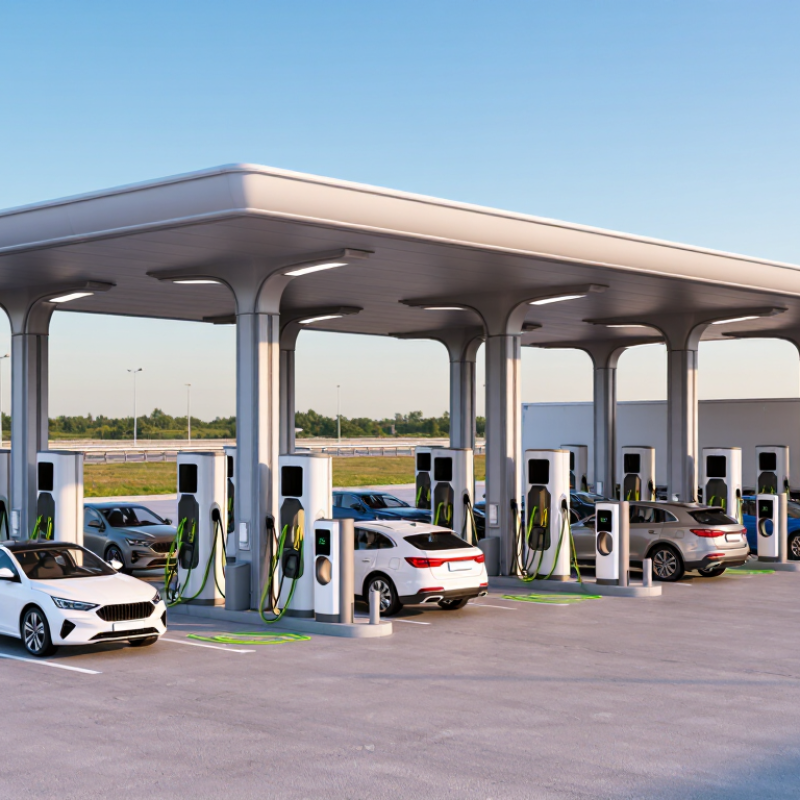
A DC charger delivers direct current to an electric vehicle’s battery. Unlike an AC charger, it performs the main power conversion outside the vehicle. This design can provide higher charging power and reduce waiting time. Inside the unit, rectifiers convert grid AC into controlled DC electricity. Sensors then monitor voltage, current, temperature, and insulation conditions.
The charger communicates with the vehicle’s battery management system. This system reports the battery’s condition and requests suitable power. Charging usually begins slowly, rises toward a higher level, then reduces power near full capacity. That final stage protects the battery and limits heat. A large power rating does not guarantee faster charging. The vehicle, cable, battery temperature, and site connection can all restrict performance.
Global buyers should examine connector compatibility, local electrical standards, enclosure protection, and service access. A humid coastal site may need stronger corrosion resistance. A busy highway location may require liquid-cooled cables and reliable payment communication. Installation quality matters as much as the charger itself. Poor ventilation, undersized wiring, or weak network coverage can create expensive delays.
I have found simple wattage comparisons misleading. A charger rated at 180 kW may deliver less power during cold weather or peak demand. Manufacturer test figures also rarely match every real-world location. Buyers should request independent safety certificates, clear warranty terms, maintenance procedures, and measured performance data. The most useful question is not “How powerful is it?” but “How consistently will it serve this site?”
Global buyers need to match DC charger types with real operating conditions, not headline charging speed. A 20–60 kW unit often suits offices, hotels, and urban car parks. Vehicles can charge steadily while drivers work or shop. These chargers usually require less grid capacity and simpler site upgrades. Speed is not everything.
Highway corridors and busy public stations may need 120–350 kW chargers. They reduce waiting time for compatible vehicles, especially during long-distance travel. However, high-power equipment demands stronger electrical infrastructure, careful thermal management, and dependable cable cooling. A charger can advertise impressive output, yet deliver less power when several vehicles charge together.
Fleet operators often prefer modular DC systems. Separate power cabinets can support multiple dispensers and simplify future expansion. Mobile DC chargers may help temporary sites, events, or locations with limited infrastructure. Buyers should check connector standards, output voltage, local certification, weather protection, payment systems, and remote monitoring. Compatibility problems are expensive. Check the grid first.
In colder regions, heating control protects charging performance. In hot, dusty areas, sealed enclosures and filtered ventilation matter more. Field testing should include peak traffic, unstable temperatures, and communication failures. A pilot installation may reveal cable handling issues that product sheets overlook. I would not select the fastest unit automatically; utilization, maintenance access, and available power often shape the better investment. Some planning assumptions will be wrong. That is normal, but ignoring them is not.
Which DC charger types suit different global charging needs?
This comparison uses representative rated output levels commonly found in global DC charging deployments. Urban chargers are suited to retail and public parking, highway chargers support rapid long-distance travel, high-power chargers reduce charging stops for compatible vehicles, and fleet chargers balance charging speed with site capacity. Actual performance depends on vehicle limits, battery temperature, grid capacity, and local regulations.
Comparing DC chargers means looking beyond the number printed on the cabinet. A 60 kW unit may suit a small fleet with long stops, while a 150 kW charger can shorten sessions when vehicles support that rate. Higher rated power does not guarantee faster charging. The vehicle’s battery, temperature, and state of charge all affect the power it accepts.
Performance also depends on how consistently a charger delivers energy. A well-designed unit should manage heat during repeated sessions and share power sensibly across multiple connectors. For example, two vehicles connected at once may receive less power each than either would receive alone. Check the output range, connector options, and site’s electrical capacity before comparing models. Details matter.
Reliability shows up in ordinary moments: a clear screen in bright sunlight, a cable that reaches a parked vehicle, and a session that starts without repeated attempts. Remote monitoring can help operators spot faults, but it cannot replace service access and a practical maintenance plan. Specifications are useful, yet they can make comparisons look cleaner than real operating conditions. I would want performance data from a similar climate and duty cycle before treating one charger as the clear winner.
| DC Charger Power Class | Typical Output Voltage | Maximum Output Current | Typical Input Supply | Connector Configuration | Peak Efficiency | Typical 10–80% Charge Time* | Recommended Application | Performance Rating |
|---|---|---|---|---|---|---|---|---|
| 20–30 kW Compact DC Charger | 200–750 V DC | 40–75 A | Three-phase AC, 380–480 V | 1 × CCS; regional connector options available | Up to 95% | Approximately 90–150 minutes | Workplaces, dealerships, small commercial sites and fleet depots with limited grid capacity | ★★★☆☆ |
| 40–60 kW Standard DC Charger | 200–920 V DC | 60–150 A | Three-phase AC, 380–480 V | 1 × CCS; CHAdeMO may be offered for selected markets | Up to 96% | Approximately 45–80 minutes | Urban public charging, retail parking and mixed vehicle fleets | ★★★☆☆ |
| 90–120 kW High-Speed Charger | 200–1,000 V DC | 120–250 A | Three-phase AC, 400–480 V | 1–2 × CCS; dynamic power sharing on dual-output versions | Up to 96.5% | Approximately 25–45 minutes | High-turnover urban hubs, supermarkets, service centers and taxi charging | ★★★★☆ |
| 150 kW Fast Charger | 200–1,000 V DC | Up to 375 A | Three-phase AC, 400–480 V | 1–2 × CCS; optional regional connector variants | Up to 97% | Approximately 20–35 minutes | Highway corridors, public charging plazas and commercial fleets | ★★★★☆ |
| 180–240 kW High-Power Charger | 200–1,000 V DC | Up to 500 A | Three-phase AC, 400–480 V | 1–2 × CCS; liquid-cooled cable commonly required near the upper current range | Up to 97.5% | Approximately 15–30 minutes | Intercity travel, premium public sites and intensive fleet operations | ★★★★☆ |
| 300–350 kW Ultra-Fast Charger | 200–1,000 V DC | Up to 500 A | Three-phase AC, 400–480 V | 1 × CCS with liquid-cooled cable; power sharing may support multiple vehicles | Up to 97.5% | Approximately 10–25 minutes | Major highway hubs, heavy-use charging plazas and future-ready installations | ★★★★★ |
| 400–600 kW Heavy-Duty DC Charger | 500–1,000 V DC | Up to 600–800 A, depending on system design | Three-phase AC, medium-voltage connection often preferred | Liquid-cooled high-power connector; truck and bus charging options may be supported | Up to 98% | Approximately 10–30 minutes for compatible passenger vehicles; longer for large commercial batteries | Electric trucks, buses, logistics depots and megawatt-ready transport corridors | ★★★★★ |
*Charge-time estimates assume a compatible vehicle, an approximately 60–80 kWh battery and a charging session from 10% to 80%. Charging power normally decreases near a high state of charge, so the rated peak output is not maintained throughout the complete session.
For global buyers, DC charger safety begins with standards that match the installation country. Check IEC 61851 for conductive charging system requirements and IEC 62196 for connectors. These standards address communication, electrical protection, and connector design. ISO 15118 may also matter when automated authentication or advanced vehicle communication is required. Do not treat a familiar certificate as universal approval.
Regional requirements need careful verification. In North America, buyers may need compliance with relevant UL safety standards, including protection against electric shock and abnormal conditions. In Europe, confirm CE marking, the supporting technical file, and applicable EMC and low-voltage requirements. UK projects may require UKCA documentation. Ask for certificates issued by accredited laboratories, not only supplier declarations. Check the exact model, input voltage, output range, and firmware version listed on each report.
Look closely at IP and IK ratings. An outdoor charger should resist rain, dust, and impact at the stated installation level. Protection should include overcurrent, residual-current detection, insulation monitoring, emergency shutdown, and thermal control. Request test dates and factory quality records. Keep them accessible.
A certificate can become outdated.
Field experience also matters. Inspect cable strain relief, ventilation paths, and enclosure seals before purchase. Ask how faults are logged and repaired. I would not rely on marketing screenshots alone. Some documents appear complete but exclude the installed configuration. That gap deserves questions, especially when local grid conditions, earthing systems, or harsh weather differ from laboratory testing.
Global buyers should choose a DC charger by market conditions, not headline power.
The International Energy Agency reported nearly 14 million electric car sales in 2023. It also recorded more than four million public charging points worldwide by year-end. This growth creates opportunity, but one charger cannot fit every region.
Start with vehicle compatibility and local standards. Check connector types, communication protocols, voltage ranges, and payment requirements. IEC 61851 compliance supports safer charging operations across many markets. ISO 15118 readiness can improve future vehicle communication, although adoption remains uneven. Grid capacity matters too. A 180 kW charger may perform poorly on a weak commercial connection. In some areas, a 60 kW unit with battery buffering could deliver better daily uptime. That trade-off is easy to miss.
Climate and maintenance deserve equal attention. Cold temperatures can reduce charging speed, while dust and humidity can increase service needs. Look for suitable ingress protection, thermal management, remote diagnostics, and replaceable components. The U.S. National Renewable Energy Laboratory has highlighted uptime as a key factor in reliable public charging networks. Buyers should request independent test records, not only supplier claims. Cost calculations should include installation, demand charges, software, spare parts, and technician response time. Small pilots are useful. They also expose weak assumptions before a large rollout. Yet pilot results may not represent holiday traffic, extreme weather, or future vehicle growth. That limitation should remain visible in the final purchasing decision.

