

The wire mesh weaving machine has transformed many industries, offering significant advantages in efficiency and quality. According to a recent report by Global Market Insights, the wire mesh market is projected to reach $8 billion by 2026. This growth is largely driven by advancements in manufacturing technologies like the wire mesh weaving machine. Industry expert John Thompson emphasized, “The efficiency of modern weaving machines has changed the game for producers.”
These machines not only increase production speed but also enhance precision in mesh design. The ability to produce various patterns allows manufacturers to cater to diverse industry needs. However, there's still room for improvement. Some manufacturers face challenges in adapting to new technologies or maintaining consistent quality. It’s crucial to continuously evaluate processes to keep up with market demands. The wire mesh weaving machine represents an opportunity, but effective implementation is key to realizing its full benefits.
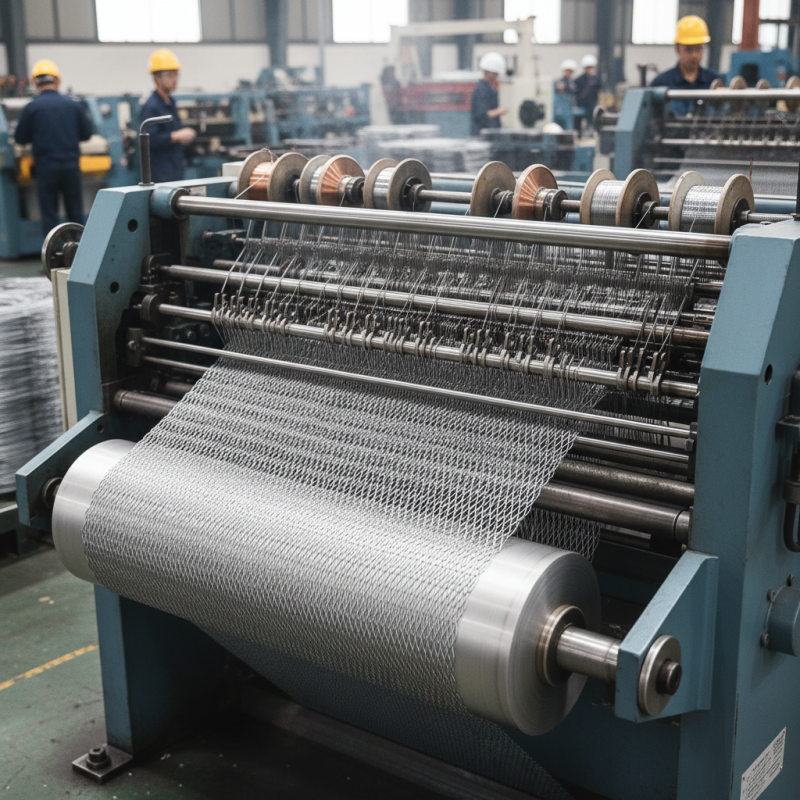
Using a wire mesh weaving machine offers numerous advantages in production efficiency. One key benefit is speed. These machines weave wire mesh significantly faster than manual methods. This increase in pace allows manufacturers to meet higher demands. Furthermore, the automation reduces human error. Fewer mistakes lead to better quality mesh products.
In addition, wire mesh machines can operate continuously. They need minimal supervision. This means that while the machine runs, workers can focus on other tasks. For instance, managing inventory or performing maintenance. It’s a great way to utilize time effectively. However, operators should periodically check for any potential mechanical issues. Regular checks can prevent unexpected downtimes.
Tips: Make sure to train your staff thoroughly. Understanding the machine's controls is vital for safe and efficient operation. Also, consider planning maintenance schedules proactively. Keeping the machine in top shape maximizes productivity and minimizes costs. Remember, neglect can lead to larger problems later on. Always look for ways to optimize your processes. This mindset fosters continuous improvement.
Wire mesh weaving machines offer enhanced customization for designs and patterns. This allows manufacturers to meet specific needs across various industries. Custom-made wire mesh can significantly enhance performance. According to a recent market report, 70% of industries prefer tailored solutions over standard options.
These machines can create different mesh sizes, shapes, and patterns. Users can adjust wire thickness and spacing easily. Such flexibility promotes creativity in design. Reports show that companies using customized wire mesh saw a 40% increase in efficiency. They were able to adapt quickly to changing market demands.
However, not all users are familiar with the full capabilities of these machines. Some underestimate the potential for innovation. This oversight can limit their competitiveness. The industry continues to evolve, with new technologies emerging regularly. Companies should stay aware and continuously explore customization options to thrive.
Automation in weaving processes brings significant advantages. One of the most notable benefits is the reduction of labor costs. Traditional weaving methods rely heavily on manual labor. This often means high wages and extensive training periods. With wire mesh weaving machines, tasks can be automated. This allows businesses to save money on labor expenses while maintaining production quality.
Implementing automation does require an initial investment. Companies may struggle with the transition from manual to automated systems. Workers will need retraining for new machinery. There can be a learning curve involved. Mistakes may happen during this period, which could affect productivity. However, in the long run, these machines can operate with fewer human errors. Human labor becomes less critical for straightforward tasks.
Moreover, using these machines can enhance efficiency. They can produce more in less time than manual methods. This efficiency can lead to increased profits. Still, businesses must ensure that their workers adapt well to new technology. There may be resistance to change among staff. Addressing these concerns early can make the transition smoother. Investing in automation is beneficial but should be approached thoughtfully.
Wire mesh weaving machines have a significant impact on material utilization. These machines can achieve a 90% material efficiency rate, which is impressive for the industry. This means less waste during production and a lower environmental footprint. Using advanced programming algorithms, manufacturers can optimize each weave's design. This process results in maximum use of raw materials.
In contrast, traditional manufacturing often leads to surplus and off-cuts. A study showed that about 30% of materials are typically wasted in older processes. By adopting modern techniques, businesses can improve their sustainability. However, transitioning to new machines can have challenges. Workers may need additional training, which can slow initial production.
Also, the upfront investment in weaving machines can be significant. Companies must weigh these costs against long-term benefits. Ultimately, the goal is to create a balance. Improved material utilization can lower overall production costs. It can reduce landfill waste too, which is critical for our planet's health. Investing in technology is a step toward responsible manufacturing.
In wire mesh manufacturing, consistency is crucial. A wire mesh weaving machine ensures that each product meets the desired specifications. This precision minimizes variations. Consequently, businesses can maintain high-quality standards. When every piece is uniform, clients appreciate the reliability of the products. Savings in rework and waste also follow from this consistency.
However, achieving this level of precision can be challenging. Operators must be trained properly to use the machines. Even minor adjustments can affect the outcome significantly. The alignment of wires and tension settings need constant monitoring. Yet, this attention to detail is what elevates the production process. Embracing these challenges means adopting a mindset of continuous improvement.
Wire mesh weaving machines not only enhance quality but also streamline production. With precise automation, workflows become more efficient. This efficiency leads to better timelines for project completion. The benefits are clear, but it’s essential to remain vigilant. Regular maintenance and operator training are key to sustaining quality over time.
| Benefit | Description |
|---|---|
| Consistent Quality | Machines ensure uniformity in wire mesh production, enhancing quality standards. |
| Precision Engineering | High accuracy in dimensions leads to optimal performance in applications. |
| Increased Production Speed | Automated processes reduce downtime and increase output rates significantly. |
| Cost Efficiency | Reduced labor costs and efficient material usage lower overall production costs. |
| Versatility | Ability to create various mesh sizes and types for diverse applications. |
| Easy Operation | User-friendly interfaces allow minimal training for operators. |
| Durability | Robust construction ensures longevity and reliability in demanding environments. |
| Reduced Waste | Precise cutting and weaving minimize scrap material and optimize resources. |
| Improved Safety | Automation decreases the risk of accidents associated with manual weaving. |
| Sustainability | Efficient energy use and minimal waste contribute to environmentally friendly production. |

