

Shopping cart

close
Tel : 94870 36000, 94860 36000, 94890 36000

China Top 10 Water Control Gate Manufacturers?

China’s water control gate industry supports irrigation, flood management, hydropower, drainage, and municipal infrastructure. This guide examines ten notable Chinese manufacturers serving these demanding applications.

A reliable water control gate must perform under pressure, sediment, corrosion, and repeated operation. The review considers engineering experience, product range, manufacturing capacity, quality systems, and project references. It also examines stainless steel, cast iron, carbon steel, and fabricated gate solutions. Seal design matters. So does maintenance access.

Public information can vary between manufacturers. Some companies publish detailed test records, while others provide limited technical evidence. Therefore, this list should guide research, not replace professional due diligence. Buyers should verify certifications, inspection procedures, material traceability, warranty terms, and after-sales support.

Practical details reveal meaningful differences. A supplier may offer a compact sluice gate for a treatment plant, or a large radial gate for a reservoir outlet. Site conditions can change the correct choice. Water pressure, opening size, installation depth, flow velocity, and control method all require careful review.

The selected manufacturers are discussed through an engineering and purchasing lens. Their capabilities may suit different budgets and project scales. Still, no ranking is beyond review. A company with impressive equipment may not fit every project. Readers should compare drawings, calculations, references, and service responsiveness before making a final decision.
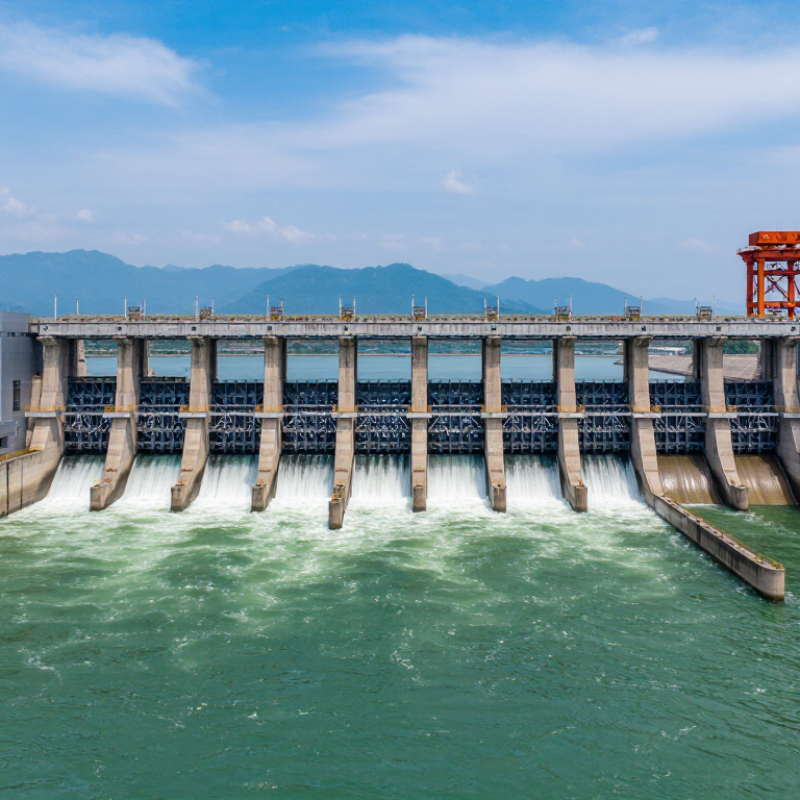
China Top 10 Water Control Gate Manufacturers?

China’s Water-Gate Industry: Top 10 Manufacturers by Product and Scale

China’s water-gate industry covers far more than simple steel barriers. A credible top-ten review should compare product focus, production scale, testing capacity, and project experience. The leading large-scale manufacturer usually supplies radial gates for reservoirs and hydropower stations. Another focuses on fixed-wheel gates for deep channels. Others specialize in slide gates, flap gates, stainless-steel penstocks, and compact irrigation controls.

The remaining manufacturers often serve wastewater plants, urban drainage projects, and automated water networks. One may offer hydraulic hoists with high lifting capacity. Another may integrate sensors, electric actuators, and remote monitoring. Custom fabricators are also important for unusual channel widths or harsh coastal conditions. Product volume matters, but it should not replace engineering evidence. A large factory can still miss corrosion details. I have seen specifications look impressive while maintenance access remained awkward.

Tips: Check drawings, material grades, weld inspection records, and pressure-test procedures. Ask for operating videos from similar projects. Review spare-parts availability and response times. A dependable supplier should explain coating thickness, sealing materials, lifting limits, and emergency operation clearly. Factory size is useful evidence, not final proof. Also compare warranty wording carefully, because vague coverage can create expensive disputes later.

China Top 10 Water Control Gate Manufacturers?

China’s Water-Gate Industry: Product Coverage by Major Gate Type

This chart compares major water-control gate product families by the number of common engineering applications they serve in China, including reservoirs, hydropower stations, irrigation canals, flood-control channels, navigation facilities, and drainage systems. The figures represent application coverage rather than company sales, revenue, or brand rankings.

Water-Gate Specifications: DN50–DN6000, PN0.1–10 MPa, and Flow Capacity

China’s water control gate manufacturing sector serves projects ranging from small drainage channels to major flood-control structures. Gate sizes commonly span DN50 to DN6000, while pressure ratings may range from PN0.1 to PN10 MPa. These figures must match actual site conditions, not just catalogue requirements.

DN50 gates suit compact pipelines and irrigation branches. DN6000 gates require careful structural design, lifting control, sealing, and transport planning. PN0.1 MPa may fit low-head channels, while PN10 MPa demands stronger bodies, reliable welds, and strict pressure testing. Flow capacity depends on more than diameter. Head difference, gate opening, channel geometry, sediment, and approach velocity all affect performance.

Field experience shows that oversized gates can create unnecessary cost and unstable operation. Undersized gates may cause excessive velocity and difficult maintenance. That mistake is easy to make. Manufacturers should provide flow curves, leakage limits, coating details, material certificates, and inspection records. Factory tests should include dimensional checks, sealing tests, and operating-cycle verification. Site commissioning remains essential, because alignment errors can appear only after installation.

A dependable supplier also explains limitations clearly. Some specifications need revision after hydraulic review. That is normal engineering practice, not failure. Buyers should compare verified data, production capacity, quality controls, and after-sales support before selecting among China-based manufacturers.

Top 10 Manufacturer Profiles: Products, Certifications, Output, and Projects

China’s top 10 water control gate manufacturers should be judged through clear, comparable profiles. Each profile should identify products, certifications, annual output, and completed projects. Product ranges may include sluice gates, radial gates, slide gates, trash racks, and hoisting systems. Material details matter too. Stainless steel performs differently from painted carbon steel in wet, abrasive channels.

Reliable manufacturers usually present quality systems such as ISO 9001, welding qualifications, inspection records, and relevant product test reports. Certifications alone are not enough. Buyers should review factory capacity, machining equipment, coating facilities, and load-testing procedures. Output figures should include measurable details, such as annual gate area, maximum gate size, or completed units. Project evidence is stronger when it shows location, water flow conditions, installation dates, and maintenance performance. Some profiles may mention irrigation networks, hydropower stations, flood-control channels, or municipal reservoirs.

Tips: Request drawings, inspection plans, material certificates, and reference projects before comparing prices. Ask whether field technicians supervise installation. Confirm spare-part availability and response times. A low quotation can hide weak coatings or limited testing. One limitation remains: public project data may be incomplete or outdated. Independent verification is still wise. Manufacturers that explain failures, design changes, and maintenance lessons often appear more dependable than those showing only polished photographs.

Gate Technology Comparison: Slide, Sluice, Radial, and Stainless-Steel Designs

China Top 10 Water Control Gate Manufacturers?

Selecting water control equipment requires more than comparing catalog photos. Gate design must match head pressure, channel width, sediment load, and maintenance access. In Chinese water projects, slide gates remain common for compact channels and moderate water levels. Their flat plate moves vertically inside guides, allowing clear shutoff control. However, damaged seals can cause visible leakage around the frame.

Sluice gates suit irrigation channels, reservoirs, and drainage stations where reliable flow regulation matters. Radial gates use curved panels and side arms to reduce lifting force under high hydraulic loads. They often perform well on spillways, but their hinges need careful inspection after floods. Stainless-steel gates resist corrosion in coastal water, wastewater, and chemically active environments. They cost more, yet the longer service interval may justify the investment.

Details matter. A 1.2-metre gate may appear simple, but misaligned guides can create vibration, uneven sealing, and difficult operation. Factory inspections should include weld quality, coating thickness, seal compression, lifting tests, and trial assembly. Designers should also verify embedded parts before concrete placement. That step is often underestimated.

Material choices are not universal. Carbon steel may suit clean inland water with proper protection, while stainless steel offers stronger resistance in aggressive conditions. Real performance depends on installation, debris control, and inspection records. Some comparisons still focus too heavily on purchase price. That is a weak measure. A quieter, slower gate may prove more dependable over twenty years.

Selection Standards: GB/T 13927, ISO 9001, Leakage Class, and Service Life

China Top 10 Water Control Gate Manufacturers: Selection Standards

A credible top-ten list should begin with test evidence, not factory size. GB/T 13927 requires documented pressure testing for industrial valves. Reviewers should request test pressure, holding time, medium, and results for every gate design. ISO 9001 confirms a controlled quality-management system. It does not prove zero leakage or long service life. That distinction matters.

Leakage class must be stated clearly. Ask whether the supplier follows ISO 5208 or an equivalent testing method. Check the specified class, seat material, operating pressure, and test temperature. A gate that passes clean-water testing may perform differently with grit, sewage, or silt. Field experience exposes this gap. Sometimes, the paperwork looks stronger than the installation.

Service-life evaluation needs more than a “50-year” claim. Request cycle-test records, coating specifications, corrosion data, and maintenance intervals. The WHO/UNICEF Joint Monitoring Programme reported that 2.2 billion people lacked safely managed drinking water in 2022, increasing pressure on dependable infrastructure. UNESCO’s 2024 World Water Development Report states that agriculture uses about 70% of global freshwater withdrawals. These figures support stricter asset selection. A practical ranking should also inspect machining accuracy, actuator compatibility, spare-part availability, and complaint response times. No certificate replaces traceable test records.

China Top 10 Water Control Gate Manufacturers? – Selection Standards: GB/T 13927, ISO 9001, Leakage Class, and Service Life

A manufacturer-neutral evaluation matrix. Company names and brand-specific claims are intentionally omitted.

No. Selection Dimension Recommended Verification Benchmark Objective Evidence to Request Suggested Weight Evaluation Focus
1 Pressure-Test Compliance GB/T 13927:2018 or the latest applicable edition, with the test method matched to the valve or gate design. Pressure-test procedure, calibrated instrument records, test pressure, holding time, medium, and signed test report. 15% Confirms pressure-shell integrity and seat-test discipline.
2 Quality Management System A valid ISO 9001 certificate issued by an accredited certification body, covering the relevant manufacturing scope. Certificate number, scope, issuing body, validity dates, and successful certificate-verification result. 12% Assesses repeatability of design, purchasing, production, and corrective actions.
3 Leakage Performance Specify the applicable leakage requirement using ISO 5208, EN 12266-1, or the project specification; do not treat “zero leakage” as a universal claim. Seat-leakage test results identifying test direction, pressure, medium, duration, and allowable leakage rate or class. 15% Matches sealing performance with the actual water-control application.
4 Design Service Life Require a project-specific service-life declaration; there is no single universal service-life value for every water-control gate. Design-life statement, operating-cycle assumptions, corrosion allowance, maintenance intervals, and replacement-part plan. 12% Separates evidence-based durability from unsupported marketing figures.
5 Materials and Corrosion Resistance Materials must be suitable for water chemistry, pressure, temperature, installation environment, and applicable project requirements. Material certificates, coating system specification, coating thickness records, elastomer grade, and corrosion-protection procedure. 10% Reduces corrosion, swelling, abrasion, and premature seal deterioration.
6 Dimensional and Functional Interchangeability Dimensions, end connections, face-to-face length, operating torque, and installation interfaces must comply with the approved drawings and applicable standards. Approved dimensional drawings, tolerance records, torque calculations, and functional inspection report. 10% Prevents installation conflicts and excessive actuator loading.
7 Factory Acceptance Testing Each finished unit should be traceable to documented dimensional, pressure, leakage, coating, and operation checks. Inspection and test plan, final inspection checklist, nonconformance records, and release certificate. 8% Verifies that the supplied unit matches the approved technical specification.
8 Actuator and Control Compatibility The actuator must provide sufficient thrust or torque, travel control, position indication, and environmental protection for the duty cycle. Actuator sizing calculation, duty-cycle data, control wiring diagram, ingress-protection rating, and manual override details. 6% Ensures reliable operation and integration with the site control system.
9 Traceability and Documentation Critical components and production stages should be traceable from purchase order through final delivery. Serial-number register, material heat numbers, inspection records, drawings, manuals, spare-parts list, and document index. 5% Supports commissioning, audits, maintenance, and future replacement.
10 After-Sales Service and Spare Parts Evaluate technical support, warranty terms, spare-parts availability, commissioning assistance, and response procedures. Warranty conditions, service-level commitment, spare-parts lead time, maintenance instructions, and escalation contacts. 7% Measures lifecycle support rather than purchase price alone.
Total Evaluation Weight 100% Use with project-specific technical requirements.
Important: GB/T 13927 concerns pressure testing of industrial valves and should be applied only when it is technically appropriate for the selected water-control gate. Leakage class, pressure rating, materials, actuator requirements, and service life should always be confirmed against the project specification and the actual gate design.
Contact Us
close slider
Scroll To Top