

how long can a fridge last without power? The answer depends on temperature, door movement, food type, and appliance condition. A sealed refrigerator can usually keep food cold for about four hours, according to the U.S. Department of Agriculture’s Food Safety and Inspection Service. That estimate assumes the door stays closed. A warm kitchen, frequent opening, or a poorly insulated appliance can shorten the safe window.
The U.S. Food and Drug Administration recommends keeping refrigerators at 40°F (4°C) or below. The freezer target is 0°F (-18°C). USDA guidance adds that a full freezer may hold a safe temperature for approximately 48 hours, while a half-full freezer may last about 24 hours. These figures are practical benchmarks, not guarantees. The four-hour rule is useful, but it is not magical.
Picture the real situation: milk sits on the top shelf, condensation forms near the door, and a digital display goes dark. A refrigerator thermometer gives stronger evidence than smell or appearance. Food can seem normal while harmful bacteria multiply. The Centers for Disease Control and Prevention advises discarding perishable foods kept above 40°F for two hours, or one hour when temperatures exceed 90°F. When uncertainty remains, throwing food away is safer than tasting it. This guide examines the best five answers, including emergency handling, freezer timing, temperature checks, and mistakes that can quietly increase food-safety risks. Experiences vary, and household advice sometimes oversimplifies the problem. Reliable decisions require temperature data, limited door opening, and careful attention to official guidance.
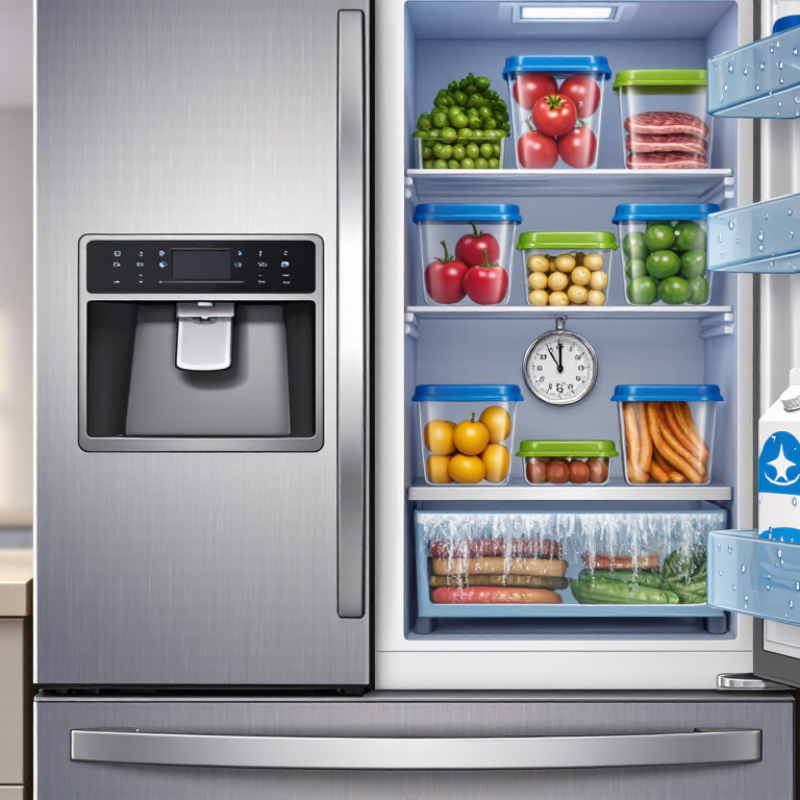
A refrigerator usually keeps food cold for about four hours without power. Keep the door closed during this period. Each opening releases chilled air, much like opening a winter window. An unopened fridge stays safer than one checked every few minutes.
Food should remain at 4°C (40°F) or below. A refrigerator thermometer gives better evidence than touch.
After four hours, inspect the food carefully. Do not taste food to test its safety. Perishable items include meat, fish, eggs, milk, soft cheese, and cooked leftovers.
If these foods become warm for two hours, discard them. The limit drops to one hour when room temperatures exceed 32°C (90°F).
Some food may still smell normal. That is not proof of safety. The four-hour rule is useful, but real conditions vary with room temperature, fridge size, insulation, and how full it was.
Tips:
Freeze water bottles before outages. Place them inside the fridge or use a sealed cooler. Grouping food together helps it stay colder. Record the outage time on paper. A small mistake can matter.
If ice crystals remain in frozen food, it may be safe to refreeze, though texture can suffer.
I would rather waste one meal than risk uncertain food, but this judgment is not always easy.
A refrigerator usually keeps food cold for about four hours without electricity. The USDA Food Safety and Inspection Service and FDA consumer guidance both use this four-hour limit. That estimate assumes the door stays closed. A warm room shortens it. Frequent opening shortens it faster. A full fridge also holds cold longer than an almost empty one. Food temperature matters, too. Items chilled to 4°C or below begin with a safer margin. Still, the four-hour rule is not magic.
The fridge’s insulation, age, door seal, and internal airflow affect cooling time. A tightly packed cabinet may preserve cold longer, but blocked vents can create warm pockets. Milk near the door may warm before food on an inner shelf.
The USDA advises discarding perishable food above 4°C for two hours, or one hour when room temperatures exceed 32°C. Use a thermometer, not smell. Dangerous bacteria may grow without changing taste or appearance. I would not guess here.
Tips: Keep the door closed. Place a refrigerator thermometer inside. Move meat, eggs, and dairy to an insulated cooler with ice. The FDA recommends keeping cold food at 4°C or below. Record the outage time. When uncertain, throw it out. This feels wasteful, but uncertainty is not a cooling method.
When the power fails, keeping food cold matters more than saving every item. An unopened refrigerator usually stays safe for about four hours. Keep the door closed. My first instinct was to check the milk repeatedly, but each opening warmed the cabinet faster. A refrigerator thermometer gives better evidence than a guess. Keep food at 40°F (4°C) or below.
Move high-risk foods into an insulated cooler with plenty of ice or frozen gel packs. Place the coldest items together, not scattered across the kitchen. Raw meat, seafood, and poultry belong in sealed containers below ready-to-eat food. Add a separate thermometer if possible. It is easy to mistake a cool surface for safe storage. Drain melted water, but do not let it touch food. If the cooler opens often, prepare smaller meal-sized coolers instead. Less convenient, perhaps. Safer.
A full freezer can hold its temperature for roughly 48 hours, while a half-full freezer may last about 24 hours. Keep it shut. When ice crystals remain and food still feels hard, it may be refrozen, though texture can suffer. Discard perishable food that stayed above 40°F for two hours, or one hour in very hot conditions. Never taste food to test it. I have learned this is where optimism becomes risky. When in doubt, throw it out.
| Question or Situation | Reliable Answer | What to Do | Food-Safety Reason |
|---|---|---|---|
| How long can a refrigerator keep food cold without power? | About 4 hours if the door remains closed. | Do not open the refrigerator unnecessarily. Use a refrigerator thermometer to check the internal temperature when power returns. | Perishable food becomes increasingly unsafe after it has been above 40°F (4°C) for too long. |
| How long can a full freezer stay cold? | Approximately 48 hours. | Keep the freezer door closed. Food may be refrozen if it still contains ice crystals or is no warmer than 40°F (4°C). | A full freezer retains cold longer because the frozen food provides thermal mass and there is less warm air space. |
| How long can a half-full freezer stay cold? | Approximately 24 hours. | Group frozen items together and avoid opening the door. Add frozen gel packs or containers of frozen water when available. | A freezer with more empty space warms faster than a full freezer during an outage. |
| What is the safest way to keep food cold during a longer outage? | Move perishable food to an insulated cooler with ice. | Keep food at or below 40°F (4°C). Use enough ice or frozen packs, keep the cooler closed, and place a thermometer inside. | Maintaining a consistently cold temperature slows the growth of harmful bacteria. |
| Which foods should be discarded after an extended outage? | Discard food that has been above 40°F (4°C) for 2 hours or more. | Discard meat, poultry, seafood, eggs, dairy products, cooked leftovers, cut fruit, and other perishables that are too warm or have an uncertain temperature history. | Some bacteria can multiply rapidly in the danger zone between 40°F and 140°F (4°C and 60°C). Never taste food to determine whether it is safe. |
When the electricity fails, keep the refrigerator door closed. The USDA Food Safety and Inspection Service reports that refrigerated food usually remains safe for about four hours. An unopened freezer can hold food safely for 48 hours when full, or 24 hours when half full. These times assume the door stays shut.
Check high-risk foods before anything else. Look at raw meat, poultry, seafood, eggs, milk, soft cheese, cooked rice, and leftovers. The FDA advises discarding perishable food exposed above 40°F (4°C) for four hours or longer. Cut fruit, prepared salads, and opened sauces also deserve attention.
A warm container of chicken can look normal, but appearance and smell cannot prove safety. Do not taste food to test it.
A refrigerator thermometer gives better evidence than guesswork. Place it in the warmest area, usually near the door. If food still has ice crystals, USDA guidance says it may be refrozen or cooked immediately.
I would discard anything with an uncertain temperature history, especially seafood and leftovers. That feels wasteful. Still, saving one meal is not worth gambling with health. The advice can seem strict because household conditions vary, and I sometimes underestimate how quickly a crowded fridge warms.
Best 5 Answers: How Long Can a Fridge Last Without Power?
How Can You Tell Whether Refrigerated Food Is Still Safe?
When power fails, keep the refrigerator door closed. USDA Food Safety and Inspection Service guidance says refrigerated food is generally safe for up to four hours if the door stays shut. A full freezer can hold a safe temperature for about 48 hours, while a half-full freezer lasts roughly 24 hours. These figures assume the appliance started cold. A warm kitchen, frequent opening, or a damaged door seal changes the estimate.
Use an appliance thermometer when possible. The FDA identifies 40°F (4°C) to 140°F (60°C) as the danger zone for rapid bacterial growth. Check the food’s temperature, not just the refrigerator display. Discard meat, seafood, eggs, dairy, cooked rice, and leftovers that stayed above 40°F for four hours or longer. Do not rely on smell, appearance, or a small taste. Dangerous bacteria may leave no obvious sign. An unopened container is not automatically safe.
Tips: Move food into a cooler with ice quickly. Keep raw meat sealed below ready-to-eat foods. Mark the outage time on paper. If you cannot confirm temperature or timing, discard the item. It feels wasteful, but guessing can be worse. A brief power interruption may cause no problem; a forgotten overnight outage needs stricter judgment.

