

Shopping cart

close
Tel : 94870 36000, 94860 36000, 94890 36000

What is a Geomembrane Welding Machine and How Does It Work?

In modern construction and environmental projects, the significance of a geomembrane welding machine cannot be overstated. These machines play a crucial role in creating reliable barriers, especially in landfills and containment ponds. The global geomembrane market is projected to reach $5.03 billion by 2025, highlighting the increasing reliance on effective sealing solutions. According to expert Dr. Jane Thompson, “The efficiency of a geomembrane welding machine directly impacts the integrity of the project.”

geomembrane welding machines utilize advanced technologies to ensure strong seams and reduce the risk of leaks. Their capabilities enable contractors to seal materials seamlessly, which is vital for preventing contamination. However, not all machines are created equal. Selecting the right type can sometimes be challenging, and improper usage can lead to failure. Additionally, some users may overlook maintenance requirements, which can diminish performance and lifespan.

The performance of these machines hinges on various factors, such as operator skill and ambient conditions. Some experts argue that training is often undervalued in the industry. As Dr. Thompson noted, “Investment in skilled operators can make the difference between a successful project and a costly failure.” Recognizing these elements is essential for optimizing the effectiveness of geomembrane welding machines in practical applications.
What is a Geomembrane Welding Machine and How Does It Work?

What is a Geomembrane Welding Machine?

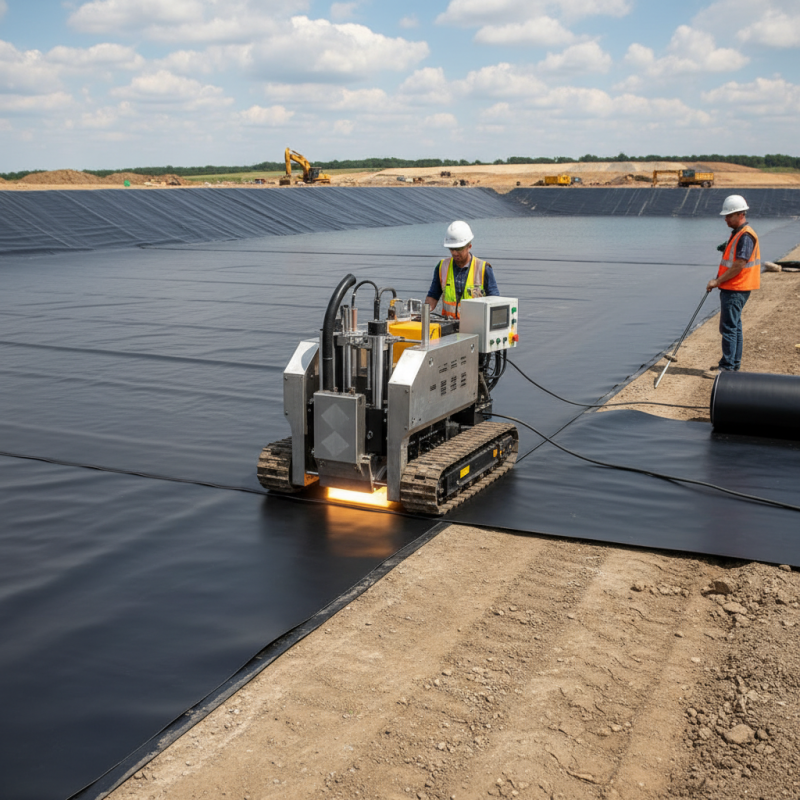
A geomembrane welding machine is a specialized tool used for joining geomembrane materials. These materials are often made from high-density polyethylene (HDPE) or other thermoplastics. They serve as barriers in various applications, including landfill liners and water containment systems. The welding machine uses heat or solvent to bond two sheets of geomembrane together, creating a secure seal.

Operating this equipment requires precision and knowledge. It is crucial to set the correct temperature and speed for the welding process. If the settings are off, the seams may weaken, leading to potential leaks. Each project may require different approaches based on material thickness or environmental conditions. This can lead to challenges during implementation.

The machine typically includes a control panel, heating element, and roller mechanism. The operator guides the machine along the seam, applying consistent pressure and heat. Misalignment can occur, affecting the quality of the weld. Adjustments may be needed to ensure proper joining. Observing the process closely is essential for success. This equipment is vital in industries where integrity is non-negotiable, yet it demands careful handling and monitoring.

Key Components of a Geomembrane Welding Machine

Geomembrane welding machines play a crucial role in ensuring secure seals in various applications like landfills and water reservoirs. One of their key components is the heating element. This part generates the necessary heat to melt the edges of the geomembrane, allowing for a strong bond. Temperature control is vital. If it’s too high, the material can deform. If too low, the weld may be weak.

Another essential component is the pressure roller. After applying heat, the pressure roller compacts the welded edges. It ensures a uniform seal. But achieving the correct pressure is tricky. Too much pressure can damage the geomembrane. Too little pressure might leave gaps.

Control systems are also critical. These systems monitor temperature and pressure in real-time, adjusting as needed. Some machines have automatic settings, but manual oversight is often necessary. This requires skilled operators who can identify when adjustments are needed. Regular maintenance is important. Over time, machines can wear out or malfunction. This can lead to costly mistakes. Understanding all components helps operators work effectively.

Principles of Operation for Geomembrane Welding Machines

Geomembrane welding machines are essential tools in various construction and environmental applications. They are designed to create strong, watertight seals between geomembrane sheets. This process ensures that liquids and gases are securely contained, preventing leaks and contamination.

The principles of operation for geomembrane welding machines rely on heat and pressure. These machines often use hot air or extrusion welding techniques. In hot air welding, air is heated and directed through a nozzle. The edges of the geomembrane sheets are softened and fused together. This results in a strong bond. On the other hand, extrusion welding uses a filler material to enhance the weld. The extruded plastic is heated and applied to the seam, ensuring durability and strength.

While these machines are effective, their operational dependability requires careful attention. Technicians must monitor temperature and pressure settings closely. An incorrect setting can lead to weak seams, risking project integrity. Operators need training to avoid common pitfalls. A small mistake can cause significant setbacks. Proper maintenance is also vital. Regular checks can prevent mechanical failures that disrupt work.

Geomembrane Welding Machine Performance Comparison

Types of Welding Techniques Used in Geomembrane Applications

Geomembranes are essential in various applications, from environmental protection to civil engineering. Welding these materials requires specific techniques. Key methods include hot air welding, extrusion welding, and laser welding.

Hot air welding is commonly used for seam joining. It utilizes heated air to soften the geomembrane edges. The materials are pressed together as they cool, forming a bond. This technique is widely favored for its efficiency.

Extrusion welding uses a nozzle to apply molten geomembrane material. The extruder feeds the material into the seam, creating a strong bond. This method is preferable for larger projects or thicker membranes.

Laser welding is known for its precision. It employs focused laser beams to melt the edges of the geomembrane. While it offers strong seams, it requires specialized equipment and training.

Tips: Always check the compatibility of geomembrane materials. Misalignment can lead to weak bonds. Ensure that the surface is clean before welding. A dirty surface can compromise the integrity of the seam. Practice on samples before starting a big project. Familiarity will boost confidence and improve the final results.

Applications and Benefits of Utilizing Geomembrane Welding Machines

Geomembrane welding machines are essential tools in various industries. They are primarily used for creating waterproof barriers in landfills, ponds, and other containment areas. The technology behind these machines ensures that seams are strong and resistant to environmental factors.

In agriculture, these machines help secure irrigation systems. They prevent water loss of ponds used for farming. In construction, they fortify foundations and create effective moisture barriers. The accurate welding process is crucial. Improper welding can lead to leaks and costly repairs.

Efficiency is a key benefit. These machines can operate quickly, saving valuable time on projects. They also ensure durability in the seams, which is critical for long-term performance. However, operators must be trained properly. A lack of knowledge can lead to failures. It’s vital for workers to understand machine functions and parameters.

Contact Us
close slider
Scroll To Top