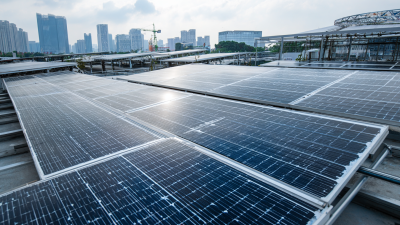

Choosing a global solar system is not simply a matter of comparing panel prices. Buyers must examine sunlight conditions, electricity demand, storage needs, grid reliability, and local technical support. A rooftop in Nairobi faces different challenges from a factory in Madrid or a remote clinic in Queensland. Each site needs evidence, not assumptions.
IEA Executive Director Fatih Birol called solar power “the new king of electricity markets.” His statement reflects rapid cost reductions, but affordability alone does not guarantee a dependable project. A reliable Power Solutions Solar purchase should include verified performance data, clear warranty terms, certified components, and an installer with documented field experience. Ask how panels perform during heat, dust, shade, and weak-grid conditions. Check battery cycle life, inverter replacement plans, and response times for maintenance.
Do not trust impressive brochures too quickly.
The lowest quotation can hide transport charges, software fees, or weak after-sales service. Buyers should compare total ownership costs over ten years, not only the initial invoice. They should also request references from projects operating in similar climates. One overlooked detail can reduce output for years. I have seen planning discussions focus heavily on panel efficiency while ignoring roof loading and cable distances. That is a useful warning. Technology changes quickly, and no buying guide is perfect. These ten practical tips provide a careful starting point for evaluating suppliers, reducing avoidable risks, and building a solar investment that performs beyond the sales presentation.

Global solar power buyers should define the energy problem before comparing equipment. A remote clinic may need dependable evening power, while a factory may need daytime peak reduction. Climate, roof structure, land access, grid quality, and local maintenance capacity shape the correct solution. Needs differ widely.
Tip 1: Write the project objective in measurable terms. Include annual energy, peak demand, backup hours, budget, and commissioning date. “Lower costs” is too vague. “Reduce grid purchases by 30% within twelve months” is clearer.
Tip 2: Build a site-specific load profile. Monthly electricity bills can hide short, heavy loads and seasonal changes. Use interval data when available, then verify it with operators.
Tip 3: Match system design to the operating environment. Heat reduces output. Dust increases cleaning needs. Salt air accelerates corrosion. Weak grids may require storage, controls, or a smaller export target. Buyers should request assumptions, performance models, safety documentation, and warranty terms in plain language. Technical detail matters.
Tip 4: Assess lifecycle support, not only purchase price. Ask who will monitor faults, stock replacement parts, train technicians, and manage end-of-life handling. Local rules and interconnection requirements must be checked early. A technically strong project can still fail through delayed permits or unrealistic maintenance plans.
Small errors spread. Early estimates are often optimistic, so allow for weather variation, degradation, currency movement, and imperfect data. Tip 5: Compare proposals against the same objectives and risk assumptions before signing contracts.
10 Tips for Global Solar Power Solutions Buyers
Evaluating Solar Technologies, System Design, and Energy Performance
Solar technology should match the site, not the sales brochure. In field assessments, shading, dust, heat, and weak grids often reduce expected output. Monocrystalline modules can suit limited roofs because they provide strong power density. Thin-film options may perform better on some hot surfaces, but they usually need more space. Review temperature coefficients, degradation rates, warranty terms, and independent test data. Do not trust one laboratory number. Compare results from similar climates.
System design deserves equal attention. Measure roof loading, wind exposure, cable routes, drainage, and maintenance access before selecting equipment. A small gap between rows can reduce shading but increase land use. Battery sizing should reflect hourly demand, backup priorities, and seasonal sunlight. Oversizing storage looks safe, yet it can raise costs and create unused capacity. Keep spare capacity practical. Protection devices, grounding, monitoring, and safe isolation need documented specifications.
Energy performance should be checked through a realistic yield model. Include local irradiation, soiling losses, inverter efficiency, temperature, and planned downtime. Ask for monthly production estimates, not only annual totals. A clear monitoring dashboard can reveal a failing connection or unusual nighttime consumption. Performance guarantees may sound precise, but measurement boundaries can remain unclear. I have seen projects miss targets because consumption data was incomplete. Recheck the assumptions. Climate conditions change, and maintenance quality is never perfectly predictable.
10 Tips for Global Solar Power Solutions Buyers
Comparing Suppliers, Certifications, Pricing, and Financing Options
Supplier comparison should begin with evidence, not attractive brochures. IRENA reported 473 GW of renewable capacity additions in 2023, including 346 GW of solar power. This growth has widened the supplier field, but quality varies across factories, regions, and project types. Request audited production records, recent delivery references, component traceability, and documented after-sales response times. A factory visit can reveal more than a sales presentation.
Certification details require careful checking. Verify IEC 61215 and IEC 61730 certificates for modules, and IEC 62109 for inverter safety where applicable. Confirm the certificate holder, product model, testing laboratory, and validity date. ISO 9001 supports quality management, but it does not guarantee energy yield. That distinction is often missed. Independent technical due diligence remains worthwhile.
Pricing should include freight, duties, civil works, installation, monitoring, spare parts, and replacement risks. IRENA’s Renewable Power Generation Costs in 2023 found that 81% of new utility-scale renewable projects were cheaper than fossil-fuel alternatives. Still, the lowest quotation can hide weak warranties or high degradation. Compare lifetime energy yield and levelized cost, not only the purchase price. Financing deserves equal attention. The International Energy Agency estimated global clean-energy investment would reach about $2 trillion in 2024, with solar investment near $500 billion. Compare loans, leases, power-purchase agreements, and local-currency structures using total repayment, interest rates, currency exposure, and required guarantees. My own procurement bias is simple: I tend to trust detailed spreadsheets too quickly. Site conditions and financing assumptions deserve a second review.
Comparing module technologies, certifications, pricing, and financing options
Indicative 2024 global module-only spot-price benchmarks in USD per watt, before freight, duties, taxes, and project-specific discounts. Prices vary by region, order volume, payment terms, and warranty package.
Confirm IEC 61215 and IEC 61730 certification. IEC 61701 is important for coastal or high-salt environments, while IEC 62716 can support ammonia-exposure projects.
Compare bankability, production capacity, quality-control records, delivery history, warranty terms, local service, and the supplier’s ability to provide traceable test reports.
Evaluate the landed price per watt rather than the factory quote alone. Include logistics, insurance, customs duties, taxes, currency risk, replacement costs, and degradation assumptions.
Compare payment milestones, letters of credit, supplier credit, leasing, project finance, interest rates, tenor, security requirements, and the effect of warranties on lender approval.
Global solar buyers need more than a panel price. Installation planning should begin with a site survey, roof loading check, shading analysis, and local grid assessment. IRENA reported 1,419 GW of global solar capacity by the end of 2023, showing the market’s scale and growing technical complexity. Tip 1: Request a complete design pack, including drawings, energy estimates, warranties, and maintenance access details. A low-cost design can become expensive after delivery.
Logistics deserve equal attention. Confirm Incoterms, packaging standards, port procedures, inland transport, insurance, and spare-parts storage before signing. IEA PVPS reported more than 400 GW of new photovoltaic capacity added globally in 2023, increasing pressure on ports and installation teams. Tip 2: Build a delivery schedule with buffer days. Weather delays happen. Customs delays happen too. Keep serial numbers and packing photos for every shipment.
Regulatory checks should cover permits, electrical standards, fire safety, grid connection rules, and recycling obligations. Requirements differ sharply between countries and sometimes between cities. Tip 3: Ask for written compliance evidence from an independent engineer, not only sales documents. After-sales support needs measurable terms: response time, remote monitoring, replacement procedures, technician training, and spare-unit availability. A five-year warranty may still disappoint if transport costs are excluded. The Global Solar Power Tracker and IRENA data show rapid deployment, but fast growth can expose weak service networks. Buyers should test the support process before purchase. Call the service line. Send a sample fault report. See what happens.
10 Tips for Global Solar Power Solutions Buyers
Managing risks, sustainability, and long-term solar system value requires more than comparing panel prices. The International Energy Agency reported that global solar photovoltaic capacity grew by about 420 GW in 2023. Tip 1: Confirm the supplier’s tested performance data. Tip 2: Review degradation rates, temperature behavior, and warranty conditions. Tip 3: Request independent quality certificates. A low price can hide costly uncertainty. Tip 4: Model energy output using local weather data, not optimistic estimates.
Tip 5: Check grid-connection rules, land permissions, and import requirements before signing. Tip 6: Assess currency, logistics, and replacement-part risks. Tip 7: Demand a clear operations plan, including cleaning, inspections, and spare components. IRENA reported that renewable capacity additions reached approximately 473 GW in 2023, with solar providing the largest share. This rapid growth also increases pressure on materials, recycling, and skilled maintenance. Tip 8: Ask how modules, batteries, and inverters will be repaired or recycled. Tip 9: Measure embodied carbon, water use, and worker protections across the supply chain.
Long-term value needs practical testing. Tip 10: Compare lifetime energy cost, not only the first quotation. Use conservative assumptions for degradation, downtime, financing, and insurance. The numbers may look less attractive. They may be more honest. Buyers should also inspect reference projects in similar climates. Desert dust, coastal salt, heavy snow, and weak grids create different failure patterns. One uncomfortable lesson remains: sustainability claims are unreliable without evidence, traceable records, and contract-level responsibilities.
| Buyer Tip | Primary Risk to Manage | Recommended Evaluation Dimension | Practical Data or Benchmark | Long-Term Value Action |
|---|---|---|---|---|
| 1Verify product quality and certifications | Premature degradation, safety incidents, or failed insurance and financing requirements. | Independent test reports, factory quality controls, and applicable electrical and structural certifications. | IEC 61215 for photovoltaic module design qualification and IEC 61730 for module safety are widely recognized reference standards. | Request certificate scope, test dates, serial-number traceability, and evidence that the certified product matches the proposed bill of materials. |
| 2Assess energy yield, not only rated capacity | Lower-than-expected generation caused by shading, high temperatures, soiling, grid limitations, or unrealistic production estimates. | Site-specific energy modeling using solar resource, temperature, tilt, azimuth, losses, and local grid conditions. | Compare expected annual yield in kWh/kWp/year and require separate assumptions for soiling, availability, clipping, mismatch, and degradation. | Use an independent yield assessment and compare P50 and P90 scenarios before approving the investment case. |
| 3Review degradation and warranty terms | Output decline may reduce project revenue and increase the levelized cost of electricity. | First-year degradation, annual degradation, warranty duration, claim process, and performance measurement method. | Many modern crystalline-silicon module warranties specify approximately 0.3%–0.5% annual degradation after the first year, but terms vary by product and contract. | Model cash flows using the contractual degradation rate and define a clear testing and remedy procedure for underperformance. |
| 4Check climate and site compatibility | Corrosion, wind damage, snow loading, flooding, hail, heat, or humidity can shorten system life. | Environmental design conditions, mounting structure calculations, enclosure ratings, and corrosion protection. | Confirm design values for wind, snow, seismic activity, ambient temperature, humidity, and flood exposure; outdoor equipment commonly requires an appropriate IP rating for its location. | Require a site-specific structural and environmental review rather than relying on generic regional assumptions. |
| 5Evaluate supplier bankability without relying on brand names | Supply interruptions, warranty non-performance, delayed spare parts, or project abandonment. | Audited financial information, manufacturing capacity, product continuity, warranty security, and regional service capability. | Use a documented scoring model covering financial resilience, delivery history, installed-base evidence, insurance, and contract enforceability. | Include escrow, performance security, spare-parts obligations, change-control provisions, and replacement-equipment requirements in the contract. |
| 6Measure sustainability across the lifecycle | Hidden environmental impacts, regulatory non-compliance, and declining stakeholder acceptance. | Embodied carbon, energy payback, material composition, recycled content, responsible sourcing, and end-of-life planning. | Compare products using a documented life-cycle assessment; energy payback varies by technology, manufacturing location, solar resource, and system design. | Request environmental product information, supply-chain policies, recycled-material data, and a documented collection or recycling route. |
| 7Compare total cost of ownership | Low purchase price may conceal high installation, maintenance, replacement, financing, or downtime costs. | CAPEX, operating expenditure, inverter replacement, cleaning, insurance, monitoring, taxes, grid fees, and decommissioning. | Calculate lifetime cost per delivered kWh and include sensitivity cases for energy yield, inflation, exchange rates, and component replacement. | Select the solution with the strongest risk-adjusted lifetime economics, not necessarily the lowest initial quotation. |
| 8Protect against currency, logistics, and trade risks | Exchange-rate movements, shipping delays, customs changes, tariffs, and damaged goods can disrupt schedules and budgets. | Incoterms, currency exposure, lead time, insurance, customs responsibility, packaging, and port or route dependencies. | Obtain a delivered-cost schedule with explicit assumptions for freight, duties, taxes, insurance, storage, and delay-related costs. | Use milestone-based payments, inspection before shipment, delivery schedules with remedies, and approved alternative components. |
| 9Specify monitoring, cybersecurity, and data ownership | Undetected faults, data loss, unauthorized access, and poor operational decision-making. | Monitoring resolution, alarm functionality, data retention, remote access controls, software support, and interoperability. | Require measurement of system availability, inverter status, energy yield, alarms, and key environmental parameters at agreed intervals. | Define data ownership, export formats, user permissions, backup procedures, software-update responsibilities, and cybersecurity controls. |
| 10Plan operations, maintenance, and end of life | Performance loss, unsafe maintenance, unavailable spare parts, and costly decommissioning. | Inspection frequency, cleaning strategy, vegetation control, thermographic testing, spare parts, training, recycling, and site restoration. | Set measurable service targets for response time, system availability, fault resolution, preventive maintenance, and reporting quality. | Include an operations manual, maintenance budget, health and safety procedures, spare-parts list, decommissioning plan, and financial provision for site restoration. |
Note: Benchmarks are general industry reference points. Final specifications should be verified against local regulations, site conditions, applicable standards, contract documents, and independent technical due diligence.