

cooling towers play a crucial role in various industrial processes. They help dissipate waste heat from equipment. According to a report by the U.S. Department of Energy, these systems can improve energy efficiency by 15-20% when properly maintained. Yet, many facilities overlook essential maintenance strategies, leading to suboptimal performance.
In over 30% of the cooling towers surveyed, operators reported issues like scale buildup and bacteria growth. These problems can decrease efficiency and pose health risks. Regular maintenance, including water treatment and system inspections, is essential. It reduces the risk of failures and extends the cooling tower's lifespan.
Implementing best practices for cooling towers not only enhances performance but also aligns with sustainability goals. In today's energy-conscious world, optimizing these systems is not just an option; it's a necessity. Many operators, however, fail to take proactive measures. The effort invested in understanding and maintaining cooling towers can lead to significant operational improvements.
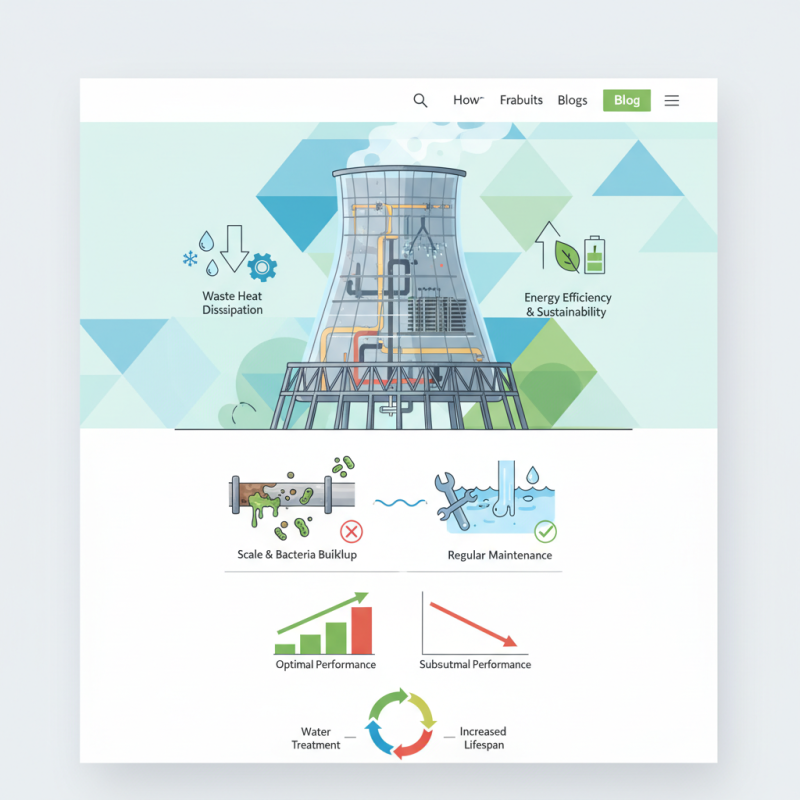
Cooling towers play a vital role in reducing heat in industrial processes and commercial buildings. By dissipating excess heat, they maintain optimal operating conditions in systems. Understanding how they function is essential for maintaining peak efficiency. These towers utilize water to absorb heat from equipment, releasing it into the atmosphere.
Proper maintenance is crucial. Research indicates that poorly maintained cooling towers can lead to efficiency drops of 20%. Regularly checking water quality prevents scaling and corrosion. It is essential to monitor pH levels and disinfect the water to avoid microbial growth. Small adjustments, like cleaning the fill media, can significantly enhance performance.
Tip: Install a dependable water treatment system. This can help mitigate fouling and extend the tower's lifespan. Furthermore, keep an eye on energy consumption. Data shows that optimizing fan performance can save up to 15% on energy costs. Consider regular inspections to identify any signs of wear and tear. These small details often have large impacts.
| Tip | Description | Frequency |
|---|---|---|
| Regular Inspection | Inspect the cooling tower for any signs of wear and tear or damage. | Monthly |
| Water Quality Testing | Test the water for pH, alkalinity, and other chemical balances. | Weekly |
| Clean Fill Media | Remove any buildup in the fill media to ensure proper airflow. | Quarterly |
| Check Fan Operation | Ensure that the fans are operating efficiently and effectively. | Monthly |
| Circulating Water Pump Check | Inspect and maintain the circulating water pump for any issues. | Monthly |
Cooling towers are vital in industrial and commercial settings. Their efficiency often hinges on key components. Understanding these parts can lead to better performance and energy savings. A report by the American Society of Heating, Refrigerating and Air-Conditioning Engineers (ASHRAE) highlights that cooling towers can lose up to 30% of their efficiency due to neglected components.
Water distribution systems are crucial. Properly designed nozzles ensure even water coverage. Uneven distribution can cause hot spots, leading to inefficient cooling. Additionally, the fill material breaks down over time. Regular inspections are essential. ASHRAE data indicates that well-maintained fills can improve efficiency by 20%.
Fans and motors are other components to monitor. Fan speed impacts airflow and heat exchange. Deteriorating fans can result in increased operational costs. A poorly functioning motor might draw excess power, leading to higher energy bills. Keeping these elements in check could avoid a 10% depletion in performance. Regular maintenance and timely upgrades contribute significantly to long-term efficiency.
Routine maintenance is key to ensuring optimal cooling tower performance. Regular inspections can identify potential issues early. Check for debris buildup and clean the intake filters often. Even a small amount of dirt can impact efficiency.
Tips for effective maintenance include monitoring water quality. Proper pH levels prevent corrosion and scaling. It's also crucial to examine the fans and motors regularly. Look for signs of wear or unusual noise. Ignoring these can lead to costly repairs.
Another important aspect is to maintain accurate records. Documenting maintenance activities helps track performance trends. If a problem arises, these records will aid in diagnosis. Oversights can grow into bigger problems. Always stay vigilant to ensure your cooling tower operates efficiently.
Cooling towers play a crucial role in industrial cooling processes. However, they can encounter various issues that hinder their performance. One common problem is scale buildup, which can reduce heat transfer efficiency. According to the U.S. Department of Energy, scaling can cause energy consumption to spike by as much as 30%. Regular maintenance and descaling procedures are essential to combat this issue.
Another frequent concern is drift loss. Excessive water loss through drift not only affects efficiency but also leads to environmental waste. Studies suggest that poorly maintained cooling towers can lose up to 0.5% of their total water flow as drift. Utilizing drift eliminators can significantly reduce this loss and improve overall performance.
Lastly, microbiological growth is a serious issue. It can lead to Legionella outbreaks if not controlled properly. The CDC reports that around 10,000 cases of Legionnaires' disease are reported annually in the U.S. from improperly maintained cooling systems. Regular water treatment and monitoring are necessary to mitigate these risks. Addressing these challenges ensures that cooling towers operate at their optimal capacity and reduce the potential for costly downtime.
Water treatment in cooling tower systems is crucial for optimal performance. Proper management minimizes scaling, corrosion, and microbial growth, ensuring efficient operation. According to industry reports, improperly treated water can lead to a 20% increase in energy consumption. This highlights the importance of regular monitoring and maintenance.
Utilizing biocides can effectively control algae and bacteria. However, overuse can lead to resistance and harmful effects on system components. The balance is delicate. Regular water testing is recommended every two weeks to adjust treatment levels. It's vital to follow guidelines to avoid excessive chemical use.
Another point to consider is the quality of the make-up water. High mineral content can worsen scaling problems. Treatment options, like reverse osmosis, can address water quality issues effectively. Nonetheless, these systems require frequent upkeep. Neglect can result in costly breakdowns. Operators should reflect on their practices, seeking continuous improvement in water management strategies.

