| Lithium-ion Battery + Supercapacitor | Supercapacitor handles rapid power spikes while the battery supplies sustained energy. | Seconds to 4 hours | Milliseconds to seconds | 85%–95% | Very high-frequency cycling is managed by the supercapacitor; battery life can improve when peak-power stress is reduced. | Frequency regulation Fast EV charging Power smoothing | Choose when the site has frequent short-duration peaks, strict ramp-rate limits, or high-value power-quality requirements. |
| Lithium-ion Battery + Flywheel | Flywheel provides rapid power balancing; the battery provides longer-duration energy shifting. | Seconds to 4 hours | Milliseconds to seconds | 80%–90% | Flywheels generally tolerate very large numbers of shallow cycles; battery cycling depends on dispatch strategy. | Grid stability Voltage support Industrial power quality | Consider available space, mechanical-system maintenance, acoustic constraints, and the need for repeated high-power events. |
| Lithium-ion Battery + Flow Battery | Lithium-ion technology supplies high power; the flow battery supplies longer-duration energy with independent power and energy sizing. | 2–12 hours | Milliseconds to seconds | 65%–85% | Flow batteries are well suited to frequent deep cycling; lithium-ion capacity may be reserved for high-power events. | Renewable shifting Microgrids Long-duration storage | Evaluate footprint, electrolyte operating temperature, auxiliary energy use, and the value of long-duration cycling. |
| Lithium-ion Battery + Thermal Energy Storage | The battery responds to electrical peaks while thermal storage shifts heating or cooling demand. | Minutes to 12+ hours | Milliseconds to minutes | System-dependent | Thermal storage can reduce electrical battery cycling by absorbing or releasing thermal energy during peak periods. | Commercial buildings District cooling Industrial heat | Choose where heating or cooling is a major load and thermal demand can be forecast with reasonable accuracy. |
| Lithium-ion Battery + Hydrogen System | The battery manages short-term electrical fluctuations; hydrogen supports multi-day, seasonal, or backup energy needs. | Hours to multiple days | Battery: milliseconds; hydrogen: minutes to hours | 25%–45% for electricity-to-electricity pathways | Hydrogen storage is suited to infrequent long-duration use; battery life depends on the number and depth of daily cycles. | Multi-day resilience Remote power Seasonal storage | Assess hydrogen production source, storage method, safety zoning, round-trip losses, water availability, and operating permits. |
| Battery + Pumped-Hydro Storage | The battery delivers fast response while pumped hydro provides bulk energy capacity and long-duration shifting. | Hours to days | Battery: milliseconds; pumped hydro: seconds to minutes | 70%–85% | Pumped hydro is generally designed for long service life and repeated cycling; the battery handles high-frequency power events. | Utility-scale renewables Peak shifting Grid balancing | Site elevation, water availability, environmental approvals, transmission access, and project-development time are decisive. |
| Lithium-ion Battery + Lead-acid Battery | Lithium-ion technology supplies high power and frequent cycling while lead-acid capacity supports lower-cost standby or backup duty. | Minutes to 8 hours | Milliseconds to seconds | 70%–90% | Lead-acid performance is sensitive to deep discharge, temperature, and high cycling; lithium-ion is generally better suited to frequent cycling. | Backup power Telecom sites Cost-sensitive microgrids | Compare replacement frequency, ventilation, temperature control, usable depth of discharge, recycling arrangements, and total lifetime cost. |
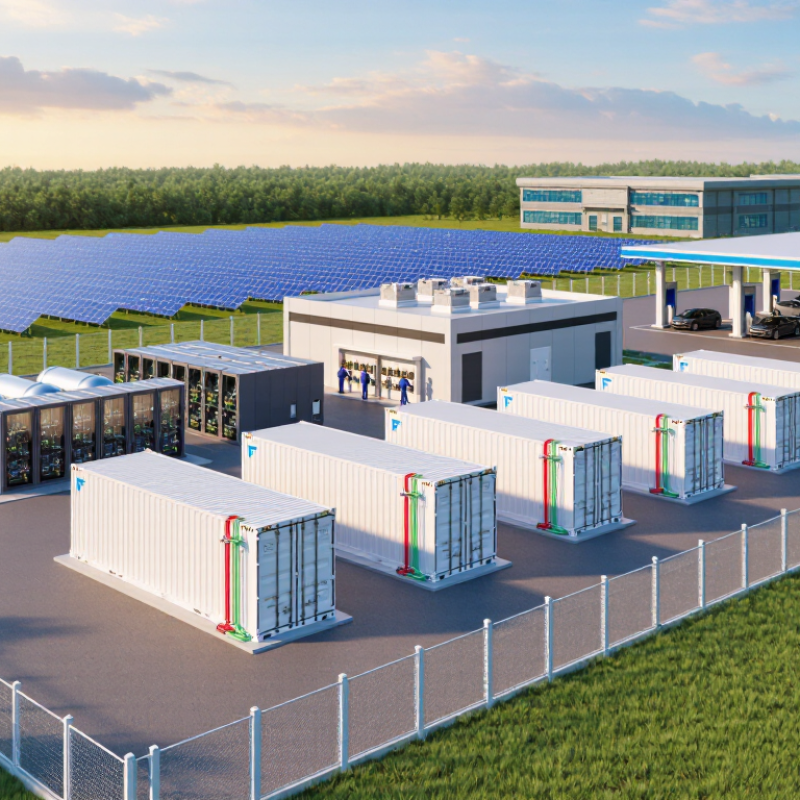
| Battery + Renewable Generation + Smart Energy Management | The battery stores excess renewable electricity while controls coordinate generation, loads, charging, and grid exchange. | Minutes to 12+ hours | Milliseconds to seconds | 75%–95% | Battery degradation depends on renewable intermittency, dispatch frequency, depth of discharge, temperature, and state-of-charge limits. | Solar-plus-storage Wind integration Energy arbitrage Microgrids | Prioritize accurate load and generation forecasts, grid-code compliance, cybersecurity, thermal management, and software interoperability. |