How to Choose an Electric Dirt Bike Manufacturer in 2026?
Choosing an Electric Dirt Bike Manufacturer in 2026 requires more than comparing speed, range, and showroom prices. A reliable manufacturer should explain its battery chemistry, motor output, charging cycle, frame design, and testing process. It should also provide clear warranty terms, replacement parts, service contacts, and realistic delivery information. A glossy website proves little. Transparent evidence matters more.
Stefan Ytterborn, founder of CAKE, once said, “We are here to accelerate the transition towards a zero-emission society.” That goal gives buyers a useful starting point. Look for manufacturers that treat sustainability as an engineering responsibility, not merely a marketing phrase. Ask how batteries are protected from heat, mud, and repeated vibration. Check whether independent riders have tested the bike on steep trails, loose gravel, and wet ground. Small details reveal experience.
The best Electric Dirt Bike Manufacturer should publish technical specifications that match real riding conditions. A claimed range may shrink sharply on hills or cold mornings. This is easy to overlook. I may value range too highly myself, while suspension quality could matter more on rough terrain. No brand is perfect, and honest manufacturers admit limitations. Review dealer feedback, inspect after-sales support, and compare long-term ownership costs before deciding. A trusted choice is not always the fastest bike. It is the one that remains dependable after the excitement fades.
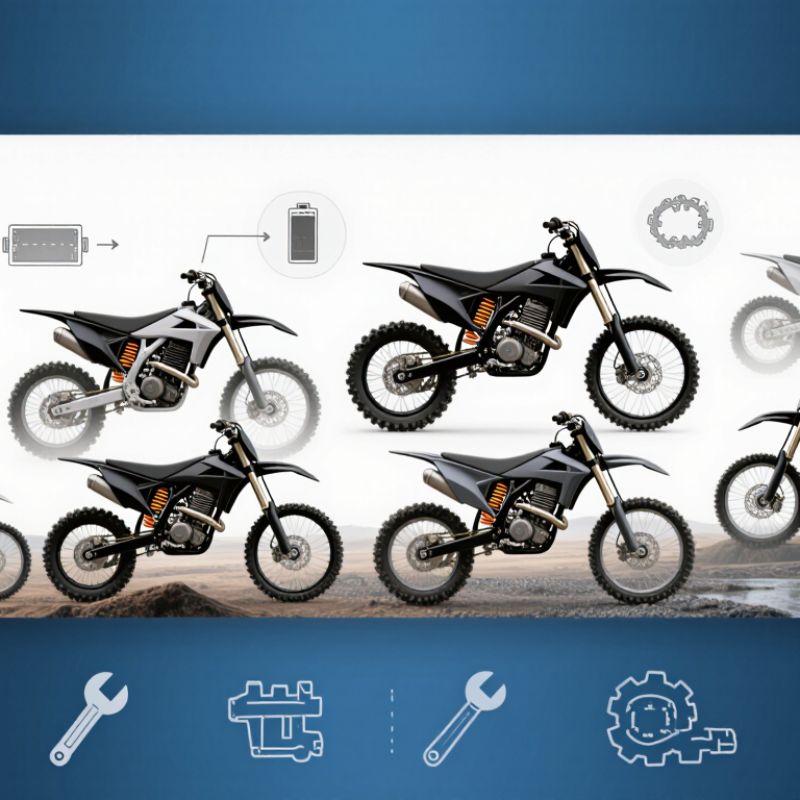
Electric Dirt Bike Manufacturer Types and Market Roles
Choosing an electric dirt bike manufacturer starts with understanding its market role. Factory OEMs control frames, batteries, testing, and long-term product updates. Specialist manufacturers usually focus on off-road geometry, suspension tuning, and rider feedback. ODM and contract producers offer flexible production, but their engineering ownership may be limited. Ask who designed the battery enclosure.
The market is expanding, but the data needs careful reading. The International Energy Agency reported nearly 10 million electric two- and three-wheelers sold globally in 2023. However, that figure includes urban scooters, not only dirt bikes. Grand View Research also forecasts strong growth for the global electric motorcycle market through 2030. Growth alone does not prove off-road competence. It may hide weak testing evidence. Look for documented range tests, thermal management results, charging cycles, and parts availability.
A credible manufacturer should explain its role clearly. Does it build the motor, integrate the battery, or only assemble imported modules? Experienced manufacturers can provide suspension settings for mud, rocks, and loose sand. They should also publish clear warranty limits and service procedures. Request serial-level quality records and independent safety testing where available. My practical mistake was trusting peak power before checking low-speed control. That choice made technical trails harder, not easier. Manufacturer selection should follow evidence, not impressive specifications.
Key Specifications to Compare Across Electric Dirt Bike Manufacturers
Choosing an electric dirt bike manufacturer in 2026 requires more than comparing advertised speed. The battery deserves close attention. Compare voltage, amp-hours, and usable watt-hours, not capacity alone. Ask how range was measured. A 72-volt battery may perform differently across sand, hills, and hard-packed trails. Check charging time, charger output, battery cooling, and replacement cost.
Motor data also needs careful reading. Compare continuous power with peak power. Peak figures can look impressive but last only briefly. Review torque delivery, riding modes, controller response, and thermal protection. Frame weight matters on tight trails. Suspension travel, adjustability, ground clearance, brake rotor size, and tire dimensions affect control. A manufacturer should publish these figures clearly. Missing data is a warning sign. I would also inspect the battery enclosure, connectors, fasteners, and cable routing. Small details often reveal practical engineering. I have found specifications can still miss real trail behavior.
Tips: Request a full specification sheet and warranty terms. Ask whether parts remain available after purchase. Compare charging tests under similar temperatures. Check the stated water-resistance rating, but do not treat it as permission for careless washing. Read service intervals carefully. A useful test includes slow climbing, repeated braking, and a cold start. Record battery percentage before and after each ride. Results may be imperfect, and that is valuable. Manufacturer support should explain the differences honestly.
How to Evaluate Manufacturer Quality, Safety, and Certification
Choosing an electric dirt bike manufacturer in 2026 requires more than checking motor power. Quality begins with traceable engineering. Ask for battery test reports, charger records, brake test results, and frame fatigue data. ISO 9001 supports consistent production, but it does not prove riding safety. That distinction matters.
Battery evidence deserves serious attention. The U.S. Consumer Product Safety Commission reported at least 208 micromobility fire or overheating incidents and 19 deaths from January 2021 through November 2022. Electric dirt bikes are not identical to scooters, yet the risk signal is relevant. Look for documented battery-management testing, thermal protection, cell traceability, and controlled charging systems. UL 2272 or UL 2849 testing may be useful, but confirm the certificate’s exact product scope. A logo alone proves little.
Safety certification should match the markets where the bike will operate. Request certificate numbers, laboratory names, test dates, and factory-audit records. Check whether the manufacturer tests suspension mounts, steering stops, waterproof connectors, and emergency cutoffs. IP ratings can help, but muddy trails expose weaknesses that laboratory conditions may miss. I would also inspect a real production sample, not only a polished prototype. Manufacturers should explain failures openly. Perfect claims make me cautious. Reports from the International Organization for Standardization and independent laboratory databases can support verification, but no document replaces practical inspection and careful after-sales support.
Comparing Costs, Customization, Production Capacity, and Reliability
How to Choose an Electric Dirt Bike Manufacturer in 2026?
Choosing an electric dirt bike manufacturer in 2026 requires more than comparing showroom prices. The IEA’s Global EV Outlook 2024 identifies electric two- and three-wheelers as the largest electric road-vehicle segment by sales. This growth attracts capable factories, but also inexperienced assemblers. Start with landed cost: battery, charger, freight, testing, spare parts, and warranty labor. BloombergNEF reported an average lithium-ion battery pack price of $115 per kWh in 2024. A low quote may hide an undersized pack or weak service support. Ask for a component-level quotation.
Customization should be measured in engineering hours, not promises. Request CAD change records, controller limits, suspension options, and sample approval procedures. Minor changes can affect thermal behavior, braking, or frame fatigue. Production capacity needs evidence. Check audited monthly output, tooling ownership, supplier redundancy, and realistic lead times. A factory producing 500 units monthly may be safer than one claiming 5,000 without traceable records. I would inspect serial-number logs and pre-shipment inspection reports. Factory tours help. They do not prove consistency.
Reliability deserves the hardest questions. Request battery cycle data, water-ingress testing, charger protection results, and warranty-claim rates by component. ISO 9001 certification shows process control, not automatic product quality. Require independent testing against applicable safety standards. Also verify software update control and replacement-part availability. I once treated a long warranty as proof of durability; that judgment was too simple. A warranty matters only when claims are handled quickly and parts are stocked. Use paid pilot units before committing to volume.
How to Choose an Electric Dirt Bike Manufacturer in 2026?
Comparison of cost competitiveness, customization, production capacity, and reliability using anonymized manufacturer categories.
Scores are normalized from 0 to 100 based on typical electric dirt bike sourcing benchmarks: estimated wholesale pricing of approximately USD 900–2,500 per unit, customization from standard component selection to fully engineered models, annual production capacity from 500 to more than 20,000 units, and reliability indicators such as warranty coverage, quality-control consistency, spare-parts availability, and production history. A higher score indicates a stronger position for that purchasing factor.