

In today’s world, businesses face growing challenges related to water efficiency and sustainability. Solar Water solutions offer a compelling answer. With a focus on renewable energy, these systems harness the sun’s power to meet water heating needs effectively. They drastically reduce utility costs and carbon footprints.
Many companies are re-evaluating their water usage and energy sources. Embracing Solar Water technology can enhance operational efficiency. Yet, it requires thorough research and understanding of specific business needs. Not all systems are created equal. Some may not perform as expected. Businesses must consider local climate and installation costs.
Investing in Solar Water may also raise questions. How much can it truly save? What are the installation challenges? Addressing these concerns is crucial for making informed decisions. By evaluating their real potential, businesses can uncover the benefits that truly align with their sustainability goals.
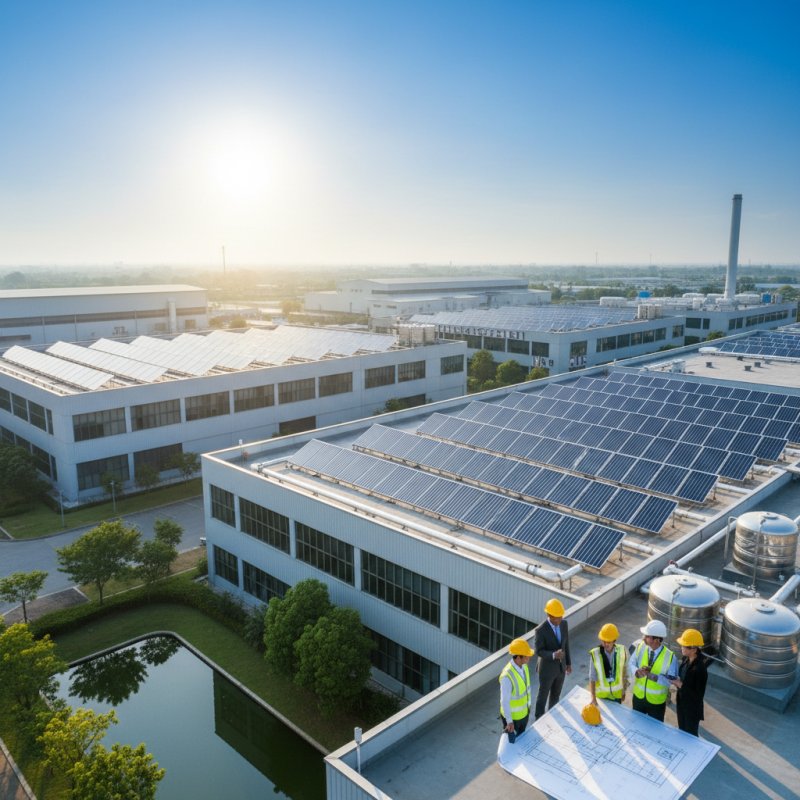
Businesses are increasingly turning to solar water solutions for several compelling reasons. These systems harness renewable energy to provide hot water efficiently and sustainably. Research from the National Renewable Energy Laboratory highlights that solar water heating can reduce energy costs by approximately 50% in commercial buildings. This substantial saving can significantly improve a business's bottom line, particularly in energy-intensive sectors.
Environmental benefits play a crucial role as well. A report from the International Energy Agency states that switching to solar water solutions can cut greenhouse gas emissions by up to 80%. This reduction helps businesses meet sustainability goals and enhances their brand image. Customers today favor green practices, and adopting solar technologies can attract eco-conscious clientele.
However, transitioning to solar water systems presents challenges. Initial installation costs can be high, and businesses may face technical hurdles. It's essential to weigh these factors against the long-term benefits. Some implementations may not yield immediate results, urging business leaders to plan and strategize carefully. Ultimately, while solar water solutions offer notable advantages, they also require thoughtful consideration and preparation to maximize their potential.
Solar water systems offer significant cost savings for businesses. The initial investment may seem daunting, but the long-term benefits are substantial. Many companies experience a reduction in their energy bills, allowing them to allocate resources more effectively.
Financial incentives further enhance the attractive nature of solar water solutions. Government programs often provide tax credits and rebates. Businesses can significantly lower their upfront costs through these incentives. In some regions, this can lead to payback periods of just a few years.
However, not every company considers solar water systems. The installation process can be disruptive. Understanding the full scope of benefits and challenges is crucial. Some businesses may also underestimate maintenance needs. It's important to weigh these factors carefully when considering sustainable options.
Solar water solutions significantly contribute to environmental sustainability. They harness renewable energy, reducing dependence on fossil fuels. A 2021 study found that utilizing solar water heaters can lower carbon emissions by up to 70%. This reduction is crucial for businesses striving to meet sustainability goals.
Implementing solar water systems also promotes water conservation. For example, solar thermal technology can reduce hot water costs by up to 80%. This not only saves money but also minimizes water waste. A focus on efficient energy use can aid businesses in establishing a reputation for responsibility and care for the environment.
However, challenges exist. Not all businesses may find solar solutions financially feasible right away. Initial installation costs can deter some. Additionally, understanding the maintenance needs of solar systems is essential. Poor maintenance can lead to reduced efficiency, ultimately impacting the intended environmental benefits. It’s vital for companies to weigh both the long-term savings and the short-term investment.
| Dimension | Data |
|---|---|
| Average Energy Savings (%) | 30% |
| Reduction in Carbon Footprint (tons/year) | 200 tons |
| Return on Investment (Years) | 4-7 years |
| Lifetime of Solar Water Systems (Years) | 25 years |
| Water Savings (liters/year) | 500,000 liters |
| Government Incentives (%) | 20% |
Solar water solutions are increasingly popular for commercial use due to their efficiency and sustainability. Various types are available, catering to different business needs.
Solar water heaters, for example, harness sunlight to heat water for domestic and industrial applications. According to a report from the International Energy Agency, these systems can reduce energy costs by up to 50%.
Another option is solar-powered water pumps. These devices are essential for businesses in agriculture and aquaculture. They use solar energy to pump water, eliminating the need for grid electricity. A study from the World Bank noted that using solar pumps can increase water access in remote areas, thereby improving productivity.
Tip: Assess your business's water needs before choosing a solution. Ensure the system's capacity aligns with your demand to avoid underperformance.
Solar desalination systems are also emerging. These systems convert seawater into fresh water using solar energy. This technology is vital for industries reliant on consistent fresh water, especially in arid regions. However, initial costs can be a hurdle.
Tip: Consider funding options and incentives when investing in solar water solutions. Government programs may help offset some costs.
Selecting the right solar water solution requires careful consideration. Each type has unique advantages, but the return on investment varies. Review performance data to make an informed choice.
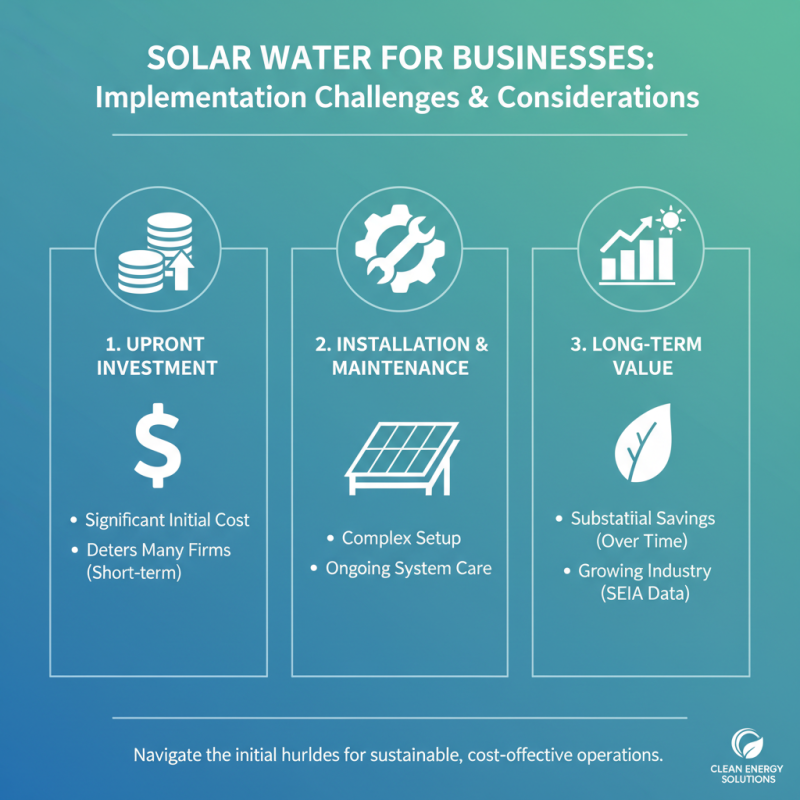
Implementing solar water solutions can present unique challenges for businesses. These systems often require significant initial investment. The upfront costs can deter many firms, despite long-term savings. According to the Solar Energy Industries Association, solar installations continue to grow. However, businesses must understand installation expenses and system maintenance.
Additionally, businesses may face logistical hurdles. Integrating these systems into existing infrastructure can be complex. Space constraints and local regulations often complicate the planning process. Research indicates that nearly 50% of businesses encounter permitting delays. Furthermore, employee training is crucial. Teams must understand the technology and operational nuances to maximize efficiency.
Companies must also consider the variability of solar energy. Seasonal changes impact water heating performance. Businesses must account for this fluctuation in their planning. A backup system may be necessary to ensure consistent service. Failure to address these variables can lead to inadequate performance during peak demand. Regular assessments are essential to identify areas for improvement and ensure that the system continues to meet business needs effectively.