

10 Best Solar Inverters for Global Buyers?
Choosing among the 10 Best Solar Inverters for Global Buyers requires more than comparing efficiency percentages. A reliable inverter must fit the panel design, local grid rules, climate, and installation skills available in each market. The right choice in Germany may perform poorly in a humid coastal village or a dusty industrial zone.
Martin A. Green, a leading photovoltaic researcher, has said, “Solar electricity is now the cheapest form of electricity in many parts of the world.” His observation highlights an important point. Solar value depends on the complete system, not panels alone. An Inverter Solar device converts direct current into usable alternating current. It also manages voltage, monitoring, safety shutdowns, and grid communication.
This guide examines leading inverter brands through practical buyer concerns. We consider conversion efficiency, battery compatibility, warranty terms, certification, software quality, and technical support. Real performance can differ from laboratory results. That matters.
Buyers should check regional service networks before ordering. A low price may become expensive when replacement parts cross borders. Hybrid systems also require careful battery matching and professional commissioning. Some products look advanced but offer limited support after installation. That weakness deserves attention.
The ranking is not absolute. Local conditions can change the best option. Readers should verify current specifications, installer qualifications, and national requirements before purchase. Even experienced buyers can miss details in rapidly changing inverter markets. This review aims to make those decisions clearer, more practical, and more accountable.
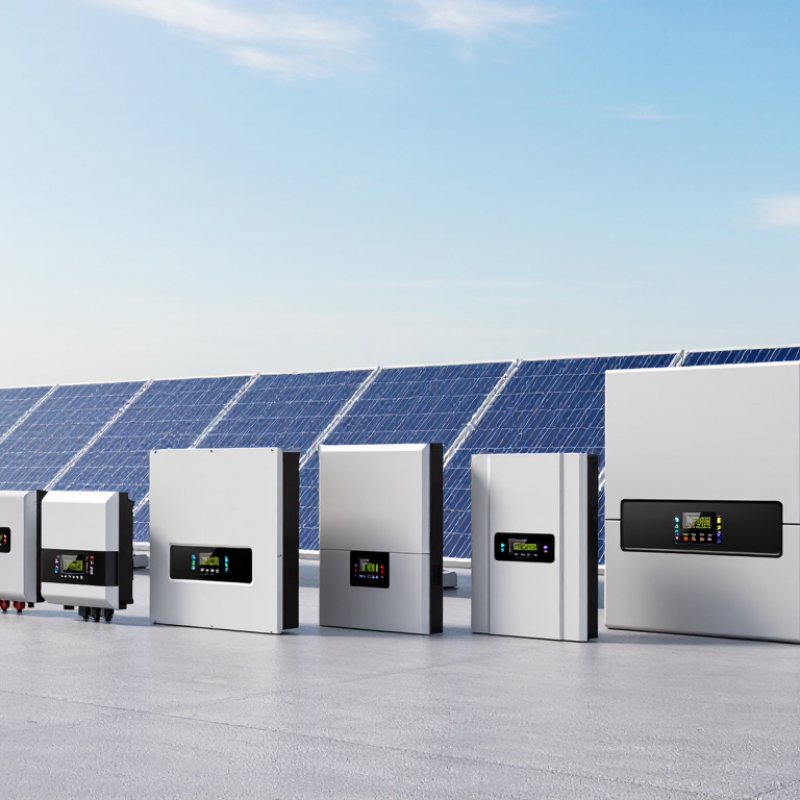
Table of Contents
[Hide]
Solar Inverter Basics and Their Role in Global Energy Systems
Solar inverters are the working bridge between photovoltaic panels and usable electricity. Panels produce direct current, while homes, businesses, and power grids usually require alternating current. The inverter converts this energy and manages its flow. Without it, a rooftop array cannot safely power ordinary equipment.
A practical assessment starts with system size, local voltage, and grid frequency. A 5-kilowatt rooftop system needs an inverter with suitable capacity, not simply the highest advertised output. Maximum power point tracking helps panels perform during changing sunlight. Shade, dust, heat, and weak wiring still reduce production. Real conditions matter.
Some systems connect batteries for evening use or backup power. Others export extra electricity to the grid. Monitoring tools can show daily yield, temperature, faults, and unusual drops. These details help installers find problems before they become expensive. Safety certifications and local approval requirements also deserve careful checking. A high efficiency figure can mislead when measured under ideal laboratory conditions. No inverter is perfect. I would compare seasonal performance, repair access, warranty terms, and installer support rather than trust one impressive number. Global buyers should also question whether replacement parts and technical service are realistically available in their region.
10 Best Solar Inverters for Global Buyers? - Solar Inverter Basics and Their Role in Global Energy Systems
| Rank | Inverter Solution | Best For | Typical System Size | Typical Peak Efficiency | MPPT Configuration | Battery Compatibility | Grid and Phase Compatibility | Key Advantages | Important Considerations |
|---|---|---|---|---|---|---|---|---|---|
| 1 | Residential Hybrid String Inverter | Homes seeking solar generation, energy storage, and backup power in one system | 3–15 kW | Approximately 97–99% | Usually 2–4 independent MPPT inputs | High-voltage or low-voltage batteries, depending on the design | Single-phase or three-phase; grid-interactive with backup capability | Combines PV conversion, battery charging, energy management, and backup functions | Battery voltage, backup output, local grid rules, and transfer time must be checked before purchase |
| 2 | Residential String Inverter | Cost-conscious homes with a simple roof layout and limited shading | 1–15 kW | Approximately 97–99% | Usually 1–3 independent MPPT inputs | Usually requires a separate battery inverter or compatible storage system | Single-phase or three-phase, depending on the local utility network | Efficient, economical, easy to service, and suitable for many standard rooftop systems | One shaded or poorly oriented module string can reduce the output of that string |
| 3 | Module-Level Microinverter System | Roofs with partial shading, multiple orientations, or complex module layouts | 1–30 kW for typical residential and small commercial arrays | Approximately 95–98% | One MPPT per module or per small group of modules | Usually paired with an AC-coupled battery system | Commonly single-phase; three-phase systems are also available for commercial applications | Module-level optimization, detailed monitoring, and reduced impact from partial shading | More electronic units are installed outdoors, which may increase replacement and maintenance complexity |
| 4 | Three-Phase Commercial String Inverter | Commercial rooftops, warehouses, agricultural buildings, and small solar plants | 15–125 kW per inverter | Approximately 97.5–99% | Typically 4–12 or more MPPT inputs | May support DC-coupled or AC-coupled storage through additional equipment | Three-phase low-voltage or medium-voltage systems, subject to interconnection requirements | Modular design, flexible array configuration, and easier replacement than a single large central unit | Requires careful string sizing, protection coordination, and three-phase grid compliance |
| 5 | Central Inverter | Large commercial and utility-scale solar plants with uniform array blocks | 250 kW–5 MW or more | Approximately 98–99% | Often uses multiple DC inputs; MPPT count varies by architecture | Usually integrated with a separate battery energy storage inverter | Three-phase medium-voltage or high-voltage plant connection through transformers and switchgear | High power density, centralized control, and potentially lower cost per watt at large scale | A failure can affect a large section of the plant; service access and spare planning are important |
| 6 | Utility-Scale Power Conversion System | Large solar farms combined with grid-scale battery storage | Hundreds of kW to multi-MW blocks | Approximately 97–99% | Depends on whether the system is connected to PV, batteries, or both | Designed specifically for lithium-ion and other large-format battery systems | Three-phase medium-voltage grid connection with plant-level controls | Supports bidirectional power flow, frequency response, voltage support, and energy shifting | Requires advanced protection, thermal management, communication, and grid-code engineering |
| 7 | Off-Grid Inverter-Charger | Remote homes, telecommunications sites, farms, and weak-grid locations | 1–30 kW per unit; scalable in parallel systems | Approximately 90–96% in inverter mode | May include an integrated MPPT solar charger or use a separate charge controller | Lead-acid, lithium-ion, and other batteries when voltage and charging profiles are compatible | Independent operation; may accept generator input and may not require a utility grid | Provides autonomous power, generator integration, and battery-based load management | System sizing must account for surge loads, battery autonomy, generator operation, and seasonal solar variation |
| 8 | Battery Inverter for AC-Coupled Storage | Adding batteries to an existing grid-connected solar installation | 3–100 kW for distributed systems; larger sizes are available | Approximately 94–98% | Normally no direct PV MPPT; solar conversion is handled by a separate PV inverter | Designed for compatible battery voltage, capacity, and communication protocols | Single-phase or three-phase; grid-forming capability varies by system | Can retrofit storage without replacing an existing PV inverter | Additional conversion steps may cause more losses than a well-designed DC-coupled system |
| 9 | DC-Coupled Solar and Storage Inverter | New solar-plus-storage projects seeking efficient battery charging from PV | 5–100 kW for distributed systems; larger plant systems are available | Approximately 96–99% | Multiple PV MPPT inputs are commonly integrated into the DC power stage | Directly connected to a compatible high-voltage or low-voltage battery system | Grid-connected, backup, or microgrid operation depending on system controls | Can reduce conversion stages when solar energy is stored before being converted to AC | PV, battery, and inverter voltage ranges must be designed as one coordinated system |
| 10 | Transformer-Isolated Inverter | Projects requiring galvanic isolation, special grounding, or compatibility with certain loads | 1–500 kW, depending on topology and application | Approximately 94–98% | One or more MPPT inputs, depending on the design | Battery compatibility depends on the DC bus, transformer arrangement, and charging controls | Available for single-phase, three-phase, off-grid, and specialized grid applications | Provides electrical isolation and can meet specific safety or equipment requirements | Generally heavier, larger, and less efficient than comparable transformerless designs |
Typical values are industry ranges rather than product guarantees. Actual performance depends on inverter topology, temperature, operating voltage, loading, installation conditions, battery chemistry, and the applicable national grid code.
Related Posts
-

10 Essential Tips for Choosing the Best Inverter for Your Solar System
-

Global Trust in Quality from China with Best Solar Water Solutions
-

Unlocking the Future: How Power Solutions Solar Can Transform Your Energy Consumption
-

5 Best Benefits of Water Solar Systems You Need to Know
-
How to Harness the Power of Home Solar to Reduce Your Electricity Bills
-
Harnessing Solar Panels Solutions at the 138th Guangzhou Fair 2025 Industry Insights and Trends