

Shopping cart

close
Tel : 94870 36000, 94860 36000, 94890 36000

7 Tips to Choose the Right EV Charging Exporter?

Electric vehicle adoption is accelerating, and charging infrastructure must keep pace. The International Energy Agency’s Global EV Outlook 2024 reported more than 14 million electric cars sold worldwide in 2023. It also recorded over four million public charging points globally. These figures show a clear opportunity for importers, distributors, and fleet operators. They also expose a difficult question: which Ev Charging Exporter can deliver dependable equipment beyond an attractive quotation?

The right partner should offer more than charging hardware. Certification, connector compatibility, cybersecurity, weather protection, warranty terms, and technical support require careful verification. The IEA notes that fast-charging deployment is becoming increasingly important as electric vehicle ownership expands. Therefore, an exporter’s power ratings, thermal management, load balancing, and remote monitoring capabilities deserve practical inspection. A charger may look impressive in a showroom. Real performance appears beside a busy highway, during winter rain, or after months of continuous use.

Price still matters. It should not lead alone. A weak after-sales network can turn a minor fault into an expensive site shutdown. The European Alternative Fuels Observatory and national transport agencies also highlight the importance of reliable, accessible charging infrastructure. Those reports do not answer every purchasing question, however. No supplier is perfect. Buyers must challenge product claims, request test records, examine customer references, and confirm delivery responsibilities. The following seven tips provide a clearer framework for evaluating an Ev Charging Exporter with practical judgment, technical discipline, and realistic expectations.
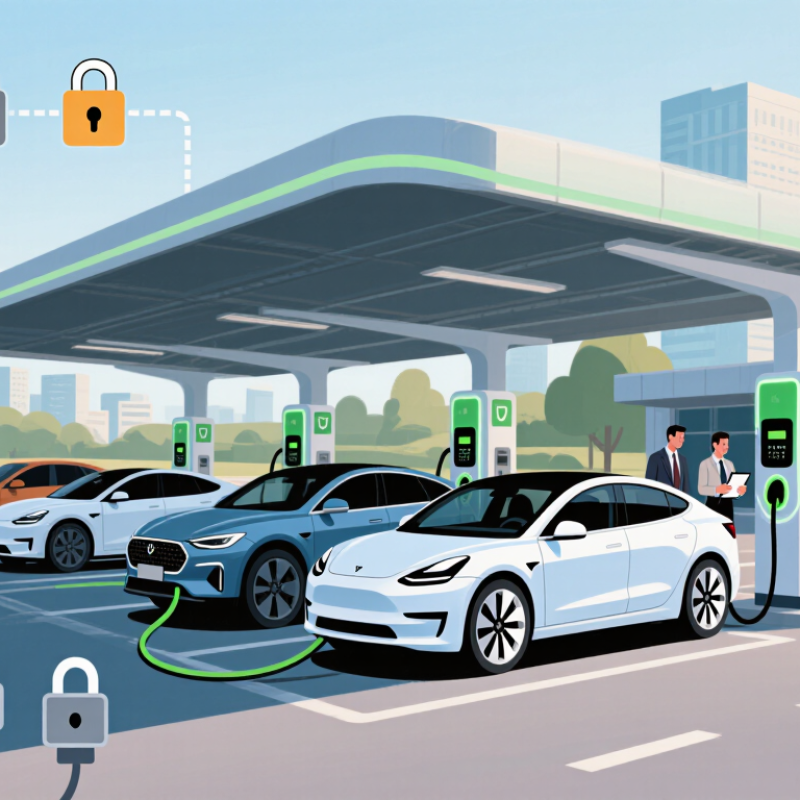
7 Tips to Choose the Right EV Charging Exporter?

Define Your EV Charging Export Requirements and Target Markets

Before contacting an EV charging exporter, define what your chargers must do in real installations. Start with the site. Record input voltage, phase type, output power, connector standard, cable length, and enclosure rating. Consider climate, parking layout, and daily charging cycles. A 22 kW unit may suit an urban depot, but it could overload a small commercial site.

Your target market changes the requirements. Check local grid conditions, charging standards, communication protocols, languages, payment methods, and maintenance expectations. Some markets need outdoor protection against heavy rain, dust, or freezing temperatures. Others require load management for limited electrical capacity. Ask the exporter for test reports, installation manuals, conformity documents, spare-parts plans, and transparent warranty terms. Small details matter. Do not rely on a generic product sheet.

Plan the first shipment as a controlled pilot. Request samples of packaging, labels, customs documents, and user instructions before placing a large order. Test the charger at realistic temperatures and charging loads. Record response times, software faults, connector wear, and installation difficulties. One common weakness is assuming that a charger approved for one region will fit another without changes. That assumption can create expensive delays. A slower pilot may feel inconvenient. It can expose missing cables, unclear manuals, or weak support before your customers do. Keep those findings in the requirement document, even when they reflect mistakes in your own planning.

Verify Product Standards, Certifications, and Safety Compliance

Choosing the Right EV Charging Exporter: Verify Product Standards, Certifications, and Safety Compliance

Tip 1: Request evidence, not promises. The International Energy Agency’s Global EV Outlook 2024 reported more than four million public charging points worldwide in 2023. That scale increases the cost of weak quality control. Ask for test reports covering the exact model, connector, power rating, and regional version. A certificate alone is not enough. It may cover only one configuration.

Tip 2: Check the standards behind the paperwork. AC and DC chargers should align with relevant IEC 61851 requirements. Connectors commonly require IEC 62196 evaluation. For communication, review ISO 15118 support when smart charging or vehicle authentication matters. Confirm that an accredited laboratory issued the report. Verify its certificate number independently. Small details matter.

Tip 3: Examine safety performance in real conditions. Request records for insulation resistance, leakage current, thermal protection, ingress protection, and emergency shutdown testing. The National Renewable Energy Laboratory has highlighted reliability and uptime as important factors in public charging deployment. Ask how failed units are diagnosed, repaired, and tracked after export.

A practical review should include factory inspection, sample testing, serial-number checks, and updated compliance files. Do not rely on translated documents alone. They can hide missing limits or outdated standards. I would also inspect cable flexibility, enclosure seals, warning labels, and firmware controls. This is where many sourcing decisions become imperfect. The lowest quoted price may exclude testing, spare parts, or technical support. A reliable exporter explains those gaps clearly.

7 Tips to Choose the Right EV Charging Exporter: Verify Product Standards, Certifications, and Safety Compliance

Charging power varies by equipment type and installation. Use the power category to check whether an exporter's product documentation matches your target market, then verify applicable standards such as IEC 61851, IEC 62196, IEC 60529, and relevant EMC requirements, together with required market certifications and safety test reports. Values show representative upper-end charging power ranges published by the U.S. Department of Energy; actual performance depends on the vehicle, electrical supply, and site installation.

Assess Manufacturing Capacity, Technology, and Product Reliability

Choosing an EV charging exporter requires more than comparing prices. Start by examining manufacturing capacity. Ask for the monthly output of your exact charger model, not the entire factory. A crowded production floor proves little. Request evidence of component sourcing, incoming inspection, and batch traceability. Visit the line if possible. Look for labeled bins, calibrated tools, and technicians recording test results. These small details reveal whether quality is managed daily.

Technology deserves practical questions. Does the charger support the communication protocols used by your vehicles and software? Can it balance loads across several units? Ask how firmware updates are secured and tested before release. Review thermal protection, enclosure ratings, connector durability, and emergency shutdown behavior. A supplier should provide test reports and clear installation limits. I once trusted a feature list too quickly. The integration later needed extra engineering.

Reliability must be measured, not promised. Request failure-rate data, warranty terms, repair procedures, and spare-parts availability. Ask for field references from climates similar to yours, including cold, heat, dust, or heavy rain. Check whether each unit has a serial number linked to production records. Independent safety and electromagnetic compatibility testing adds confidence, but certificates should match the shipped model. Sample several units before a large order. Test them repeatedly. Small pilot projects expose weak documentation, slow support, and unstable software before those problems reach customers.

7 Tips to Choose the Right EV Charging Exporter? - Assess Manufacturing Capacity, Technology, and Product Reliability

No. Evaluation Area What to Check Recommended Evidence or Benchmark Why It Matters Warning Sign
1 Manufacturing Capacity Review monthly production capacity, production-line layout, equipment, staffing, and the supplier’s ability to handle peak-order volumes. Request a capacity statement showing normal and peak monthly output, current utilization, lead time, and the location of final assembly and testing. A supplier with documented capacity is more likely to maintain delivery schedules and consistent quality during large orders. Capacity figures are verbal only, or production depends on undocumented subcontractors.
2 Safety and Regulatory Compliance Confirm that the charger design matches the electrical, radio, environmental, and market-access requirements of the destination country. Check applicable test reports and declarations for IEC 61851, IEC 62196, IEC 60364-7-722, EMC requirements, and regional approvals where applicable. Compliance documentation reduces certification delays, installation risks, and customs or market-entry problems. Only generic certificates are supplied, or model numbers on certificates do not match the offered product.
3 Charging Technology Evaluate charging mode, rated power, connector configuration, load management, communication protocols, and protection functions. For networked chargers, verify OCPP 1.6J or OCPP 2.0.1 compatibility when required. Confirm residual-current protection, over-temperature protection, over-voltage protection, and automatic restart behavior. Compatible communication and protection features support safer installations and integration with charging-management software. Protocol support is described as “compatible” without a test environment, integration record, or written feature list.
4 Product Reliability Assess enclosure protection, thermal design, connector durability, cable quality, relay life, and performance under repeated charging cycles. For outdoor use, consider an enclosure rating of at least IP54; higher protection such as IP65 may be preferable in exposed locations. Request temperature, humidity, insulation, and endurance test records. Environmental and endurance testing helps reveal failures caused by moisture, heat, cold, dust, and repeated use. The supplier provides only appearance photos and nominal power data, with no environmental or endurance test evidence.
5 Quality Management and Testing Examine incoming-material inspection, in-process controls, final inspection, traceability, calibration, and corrective-action procedures. A valid ISO 9001 certificate, documented inspection plans, serial-number traceability, calibrated test equipment, and sample factory inspection records are useful indicators. A controlled quality system reduces batch variation and makes defects easier to identify and correct. There is no clear distinction between prototype testing, production testing, and third-party certification.
6 Export and After-Sales Capability Check export documentation, packaging, spare-parts availability, installation support, remote diagnostics, and response procedures for field failures. Request sample commercial invoices, packing lists, installation manuals, troubleshooting guides, spare-parts lists, and a written service-level process. Clear documentation and support reduce installation time and total cost of ownership after delivery. The exporter cannot provide localized manuals, replacement-part lead times, or a defined process for warranty claims.
7 Warranty and Total Cost of Ownership Compare purchase price with installation, software, logistics, maintenance, replacement parts, energy losses, and warranty coverage. Require a written warranty covering the complete charger, defined exclusions, claim-processing time, spare-parts policy, software fees, and expected service life. A lower initial price may become more expensive if downtime, software charges, or difficult repairs are not included in the quotation. The quotation omits warranty exclusions, recurring fees, delivery terms, or responsibilities for installation and service.
Practical scoring rule: Score each category from 1 to 5 using documented evidence rather than verbal promises. Give additional weight to safety compliance, product reliability, quality controls, and after-sales support when comparing exporters.

Compare Pricing, Warranty Terms, Logistics, and After-Sales Support

Choosing the right EV charging exporter requires more than comparing the lowest unit price. Start by requesting a complete quotation, including charger cost, packaging, testing, documentation, freight, insurance, and possible customs charges. A cheap offer may exclude essential parts, such as cables, connectors, or mounting hardware. Ask for pricing at different order volumes and check whether payment terms affect the final cost.

Review the warranty in practical detail. Confirm its length, coverage, repair process, replacement conditions, and response time. Ask who pays for return shipping when a charger fails. A two-year warranty sounds useful, but vague exclusions can make it almost worthless. Request product test records, quality-control procedures, and evidence of compliance with the destination market’s requirements. I still see buyers overlook regional power differences.

Logistics can decide whether a project succeeds. Check production lead times, port options, carton strength, pallet dimensions, and tracking procedures. Ask how the exporter handles damaged goods or delayed shipments. One photographed pallet before dispatch can prevent a long argument later. Clarify delivery terms in writing, because “shipping included” can mean very different things.

After-sales support deserves equal attention. Test the exporter’s communication before ordering by sending technical questions. A reliable team should provide installation guidance, fault diagnosis, firmware procedures, and spare-part availability. Ask whether remote support is available during local business hours. Also request a clear escalation path for repeated failures. Some exporters promise fast service, but their support depends on one person. That is a risk. Compare documented service commitments, not friendly promises.

Evaluate Exporter Reputation Through Audits, Samples, and References

A reliable EV charging exporter should prove its reputation, not merely describe it. Request recent audit reports covering production, quality control, worker training, and corrective actions. Check the auditor’s independence, report date, facility address, and audit scope. A certificate without traceable details is weak evidence. Look closer.

Ask whether the factory can show batch records, component inspections, and final functional tests. During a site visit, observe cable storage, connector handling, and packaging conditions. These small details often reveal operational discipline. If a supplier refuses reasonable verification, treat that refusal as useful information. It may indicate limited transparency, although it could also reflect confidentiality concerns.

Samples should represent normal production, not specially prepared units. Test charging stability, temperature performance, enclosure protection, cable strength, and communication with compatible vehicles. Record serial numbers and test conditions. Independent laboratory checks add credibility. Reference customers can explain what documents cannot: delivery accuracy, failure rates, response speed, and warranty handling. Ask for references from similar markets and project sizes. Speak with more than one contact. One favorable story proves little. I have found that buyers sometimes overvalue polished presentations and undervalue service records. That judgment deserves review. A respected exporter welcomes specific questions, shares verifiable evidence, and admits limitations before problems reach the installation site.

Contact Us
close slider
Scroll To Top